



卷 17, 编号 4 (2025)
- 年: 2025
- ##issue.datePublished##: 24.12.2025
- 文章: 10
- URL: https://journals.rcsi.science/2076-2577/issue/view/20190
完整期次

Lexicology
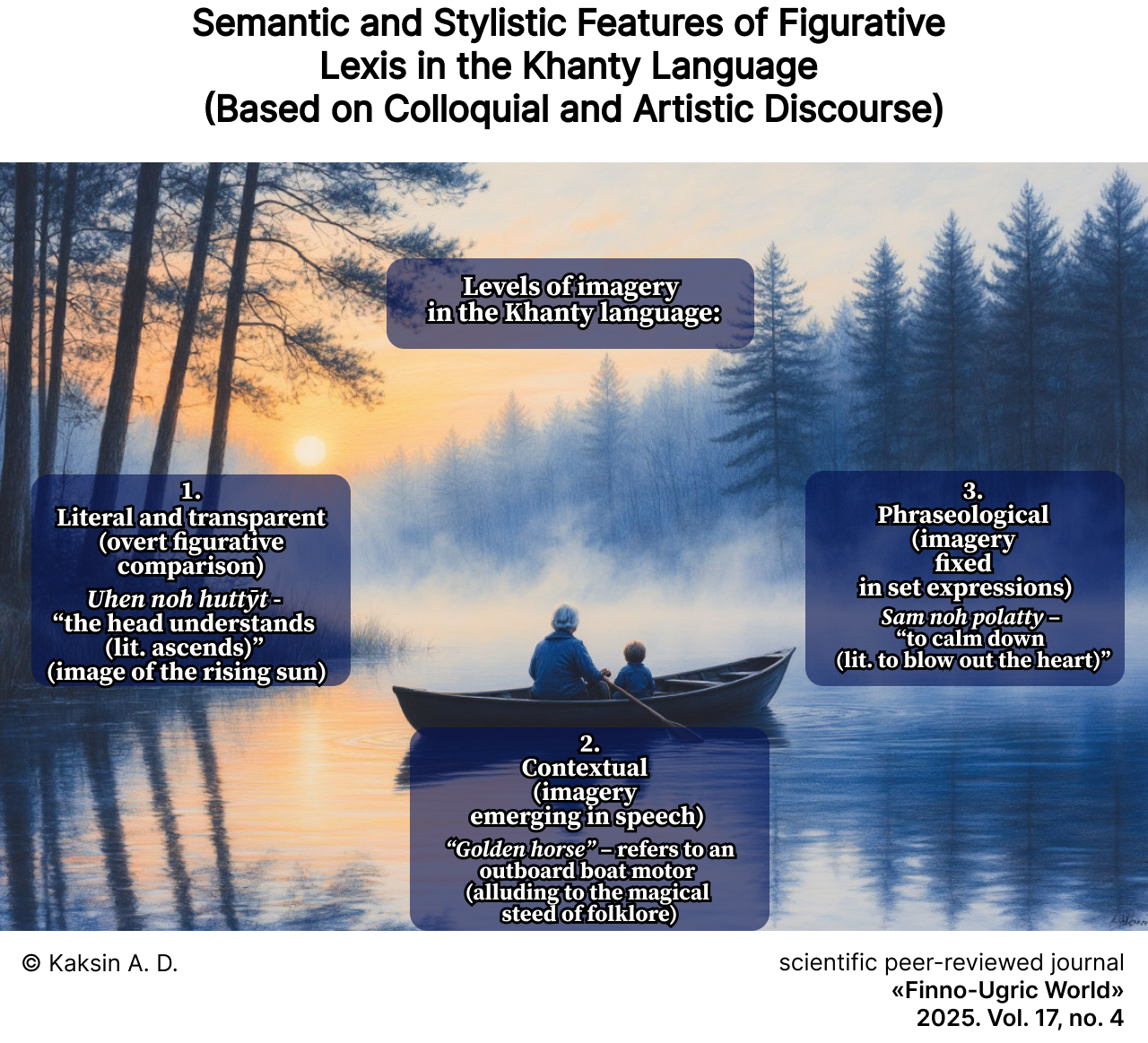
Semantic and Stylistic Features of Figurative Lexis in the Khanty Language (Based on Colloquial and Artistic Discourse)
摘要
Introduction. To date, in linguistics, the problem of separating figurative words from other expressive language units remains unresolved. The criteria according to which a given lexical unit is marked as figurative in an explanatory dictionary are unclear. The aim of the research is to identify and analyze the types of figurative words and expressions in the Khanty language.
Materials and Methods. The study was conducted using texts in the Kazym dialect of the Khanty language, employing Wolfgang Steinitz’s “Dialektologisches und etymologisches Wörterbuch der Ostjakischen Sprache” (1966–1991). The author’s approach to the topic is based on an understanding of language as a complex, multi-level system, the individual elements of which are studied by linguists using various methods. The essence of the most important method for us lies in the systematization of concepts that describe units of the same nature and that stand in relations of variability to one another. In our case, figurative words and expressions are examined as expressive means, and their distinctive features are identified against the background of epithets, metaphors, and similes. In the course of textual analysis, all expressive means are first identified, followed by those linguistic units whose semantics contain an indication of the location of the source, the original. The semantics of words whose meanings imply the presence of a figurative component are verified using W. Steinitz’s dialectological and etymological dictionary. It is also assumed that many figurative words and expressions of the Khanty language are already recorded in this dictionary.
Results and Discussion. The analysis of speech samples in the Khanty language has revealed the possibility of distinguishing figurative words and expressions from other expressive means and of deriving a specific typology of figurative units in the language. Lexical figurative units include the majority of figurative meanings of words, compound words (including those formed through the transference of meaning of one of their components), and figurative phrases (including those that are part of proverbs and sayings). Contextual figurative units are words and combinations whose figurative component arises within a given specific context.
Conclusion. The practical significance of the study lies in the effectiveness of searching for figurative words and expressions in colloquial speech and literary works – that is, in those types of discourse where they are actively used. The prospects for further research are associated with accumulating sufficient material to compile a dictionary of figurative words and expressions in the Khanty language.
 388-397


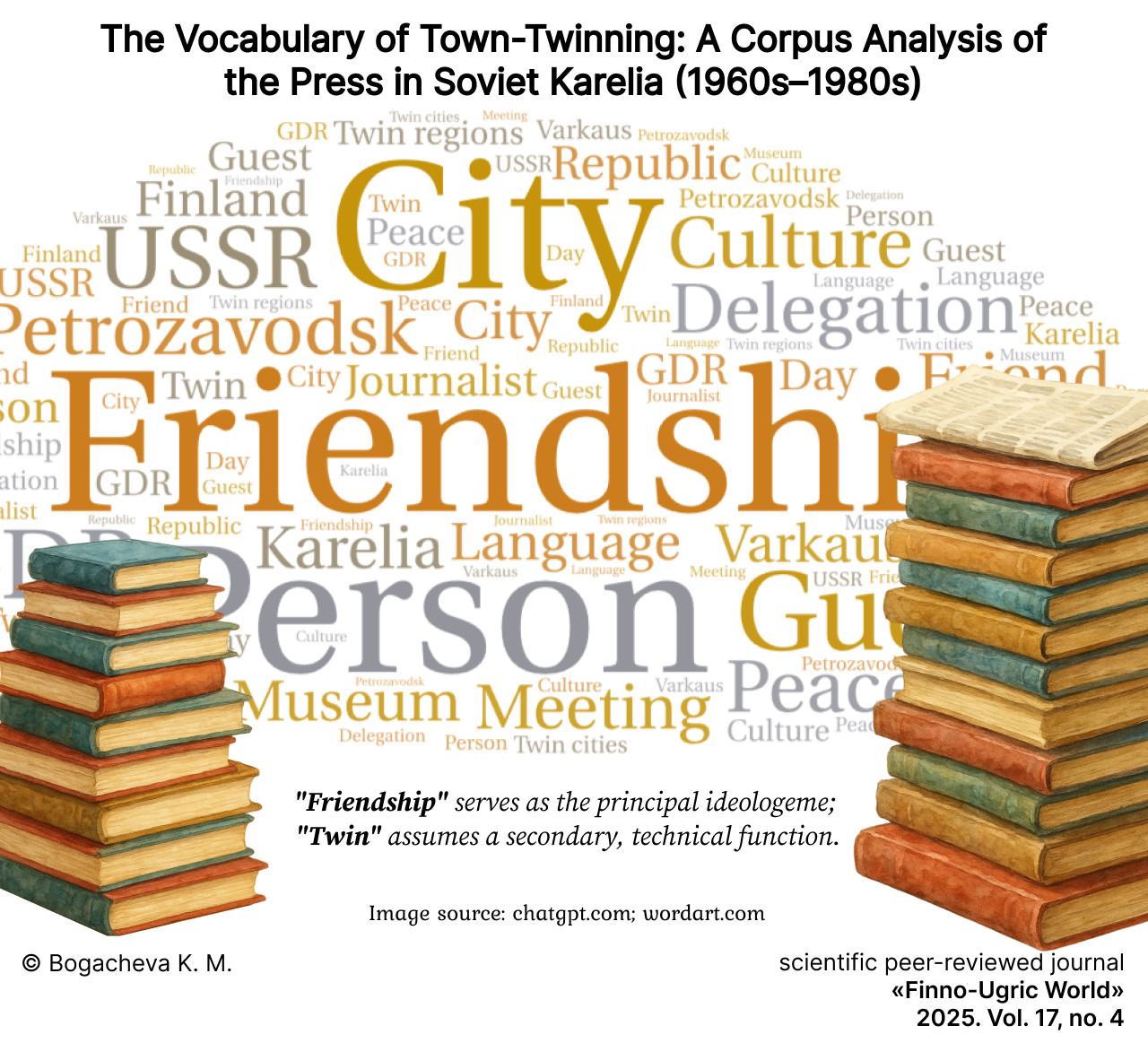
The Vocabulary of Town-Twinning: A Corpus Analysis of the Press in Soviet Karelia (1960s–1980s)
摘要
Introduction. The study of the functions of town-twinning city terminology in the regional press of the Soviet period constitutes a relevant scholarly issue. Existing historiography has not addressed this aspect, creating a necessity for the integration of linguistic analysis with a critical examination of Soviet ideology. The reconstruction of the mechanisms of propagandistic influence in the Soviet press allows for a deeper understanding of the nature of historical media discourses, while the analysis of materials from Karelian newspapers provides an opportunity to identify the specificities of how the image of international cooperation was formed, as well as the enduring linguistic patterns of the Soviet era. The aim of this research is to delineate the specific features and mechanisms through which the lexicon of town-twinning relations functioned within the local-historical and broader political context of the period.
Materials and Methods. This study examines the vocabulary of town-twinning ties in the press of Soviet Karelia, drawing on corpora of articles from the newspapers Leninskaya Pravda and Komsomolets (1960–1980). The methodology is based on an integration of corpus technologies (using the Sketch Engine manager) and traditional discourse analysis. The text corpus was processed using the following tools: Word List (for frequency analysis), N-grams (to identify formulaic phrases), and Word Sketch Differences (to analyse contrasts in collocations). This integrated approach enabled the translation of qualitative observations into quantitatively verifiable data.
Results and Discussion. The discourse of twinning in the Karelian press during the second half of the 20th century possessed a strictly hierarchical structure. The dominant ideologeme, fulfilling mythologizing and legitimizing functions, was “friendship”. The term “twin city” occupied a subordinate position, functioning as a technical status marker with limited, situational combinability. Consequently, the propaganda of twinning in the republican press was realized through the sacralization of the “friendship” ideologeme and the ritualization of the “twin city” term. The obtained results demonstrate the efficacy of the corpus manager Sketch Engine for processing large volumes of newspaper texts and identifying statistical patterns. The identified mechanisms reflect the general principles of constructing ideological reality within Soviet media discourse.
Conclusion. This study presents the first comprehensive analysis of the vocabulary of town-twinning relations in the press of Soviet Karelia. A methodology integrating corpus technologies and critical discourse analysis was tested, offering a means to broaden the methodological toolkit for studying the language of Soviet newspapers. The identification of the hierarchical subordination of the term “pobratim” (twin) to the ideologeme “druzhba” (friendship) as a key mechanism of ideological discourse deepens our understanding of the principles of reality construction in the Soviet press. The findings are significant for research in Soviet linguistics and media discourse and can be applied to the study of ideological influence mechanisms in both central and regional media.
398-411
Toponymy and Dialectology
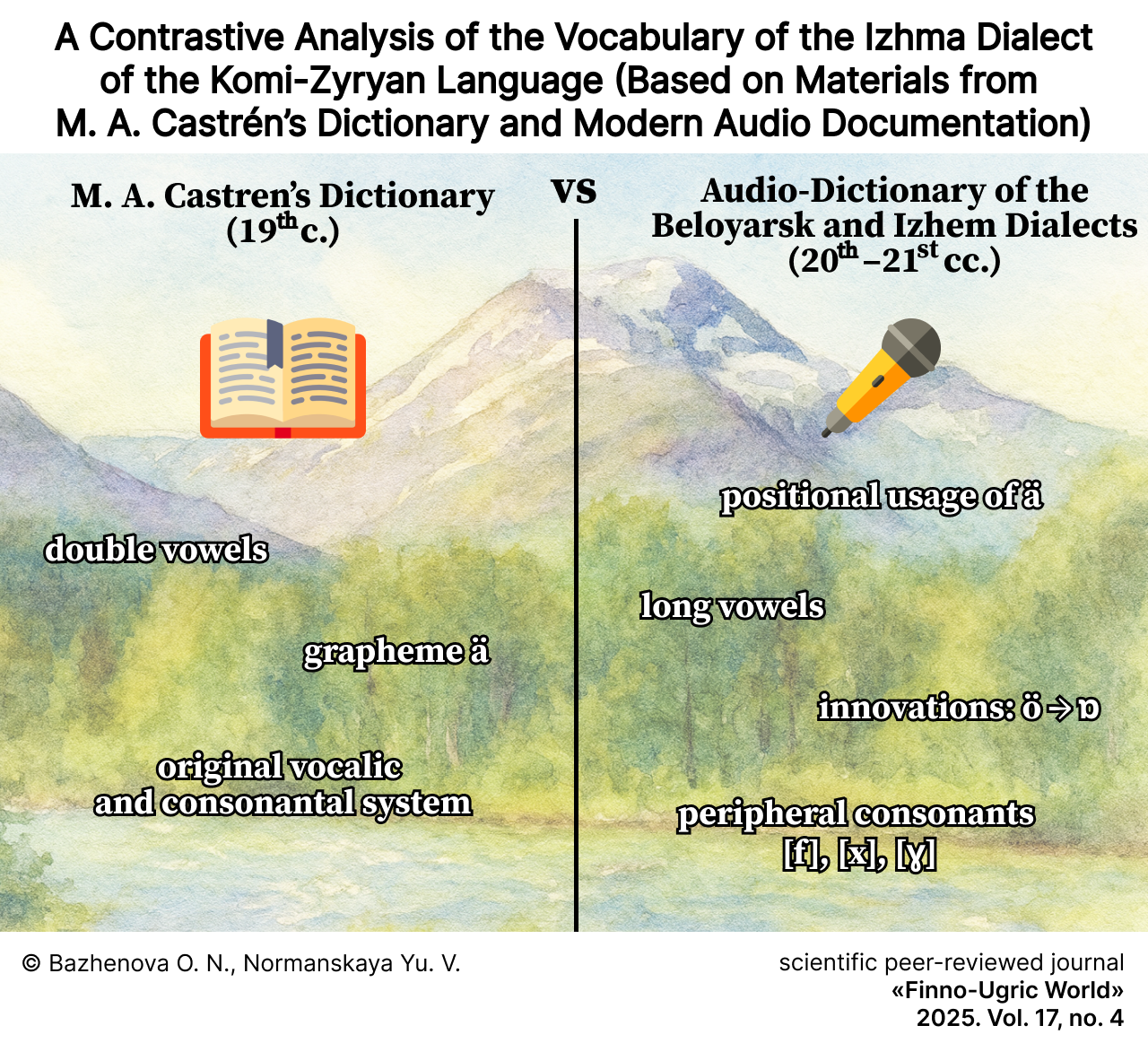
A Contrastive Analysis of the Vocabulary of the Izhma Dialect of the Komi-Zyryan Language (Based on Materials from M. A. Castrén’s Dictionary and Modern Audio Documentation)
摘要
Introduction. Currently, there is no verified basis for assessing the accuracy of early field recordings of the Izhma dialect of the Komi-Zyrian language or for determining the facts of phonetic changes that have actually occurred in the dialect over a nearly two-hundred-year period. Despite the existence of individual descriptions, the scientific literature on the Izhma dialect of the Komi language lacks systematic research based on a direct comparison of historical material with digital audio recordings, which provide more accurate documentation of speech parameters. A gap remains in understanding the dynamics of dialectal vocalism and consonantism, as well as the mechanisms of their evolution. This article seeks to fill this lacuna by integrating sources from different periods into a unified digital format, LingvoDoc, and creating a methodological foundation for future historical-phonetic reconstructions. The aim of the study is to identify phonetic correspondences and describe processes that may indicate both the preservation of archaic features and the gradual formation of new tendencies in the development of the dialect.
Materials and Methods. The research material comprised M. A. Castrén’s dictionary, presented in the book “Elementa grammatices Syrjaenae” (1844; critical edition 2022) – 1,146 lexical units, and the audio dictionary of the dialect of the village of Beloyarsk, Priuralsky District, Yamalo-Nenets Autonomous Okrug (2012) – 1,455 lexical entries, including phonological transcription and audio recordings. The comparison was carried out using the LingvoDoc digital platform, employing the tools “Inventory of Phonemes/Allophones,” “Spectrogram Analysis Results,” “Search for Cognates in Different Dialects of One Language,” and “Cognate Analysis”. The analysis was conducted in stages: first, regular correspondences between the 19th and 21st-century data were identified, followed by the clarification of positional patterns.
Results and Discussion. A comparison of the data from the experimental-phonetic analysis of the modern Beloyarsk dialect with the materials from M. A. Castren’s dictionary demonstrates the high accuracy of his documentation. Thus, the double vowel graphemes recorded by Castren, although not always corresponding to distinct phonemes in the modern dialect, in most cases correspond to longer vocalic realizations. Of particular interest is the grapheme ä: previously, it could have been considered an irregular notation with no direct parallels either in Proto-Komi or in modern dialects; however, the analysis has shown that its usage followed positional rules. The study also established the approximate timeframe for the development of labial harmony in the Izhem dialect (late 20th – early 21st century). Alongside general trends characteristic of many Komi-Zyrian dialects, specifically Izhem innovations such as ӧ > ɒ have been identified. The modern consonant inventory is supplemented by peripheral sounds [f], [x], [ɣ], found primarily in borrowed vocabulary.
Conclusion. A comparison of M. A. Castren’s dictionary with contemporary audio material of the Beloyarsk village dialect allows us to speak of regular phonetic correspondences and generally consistent directions of change in the vocalism and consonantism of the Izhma dialect. The integration of instrumental analysis using Praat and the digital environment LingvoDoc has proven effective for verifying historical recordings and clarifying positional patterns. The obtained results establish a foundation for further comparative studies within the area of Komi-Zyrian dialects and for a more detailed interpretation of the observed processes.
412-429
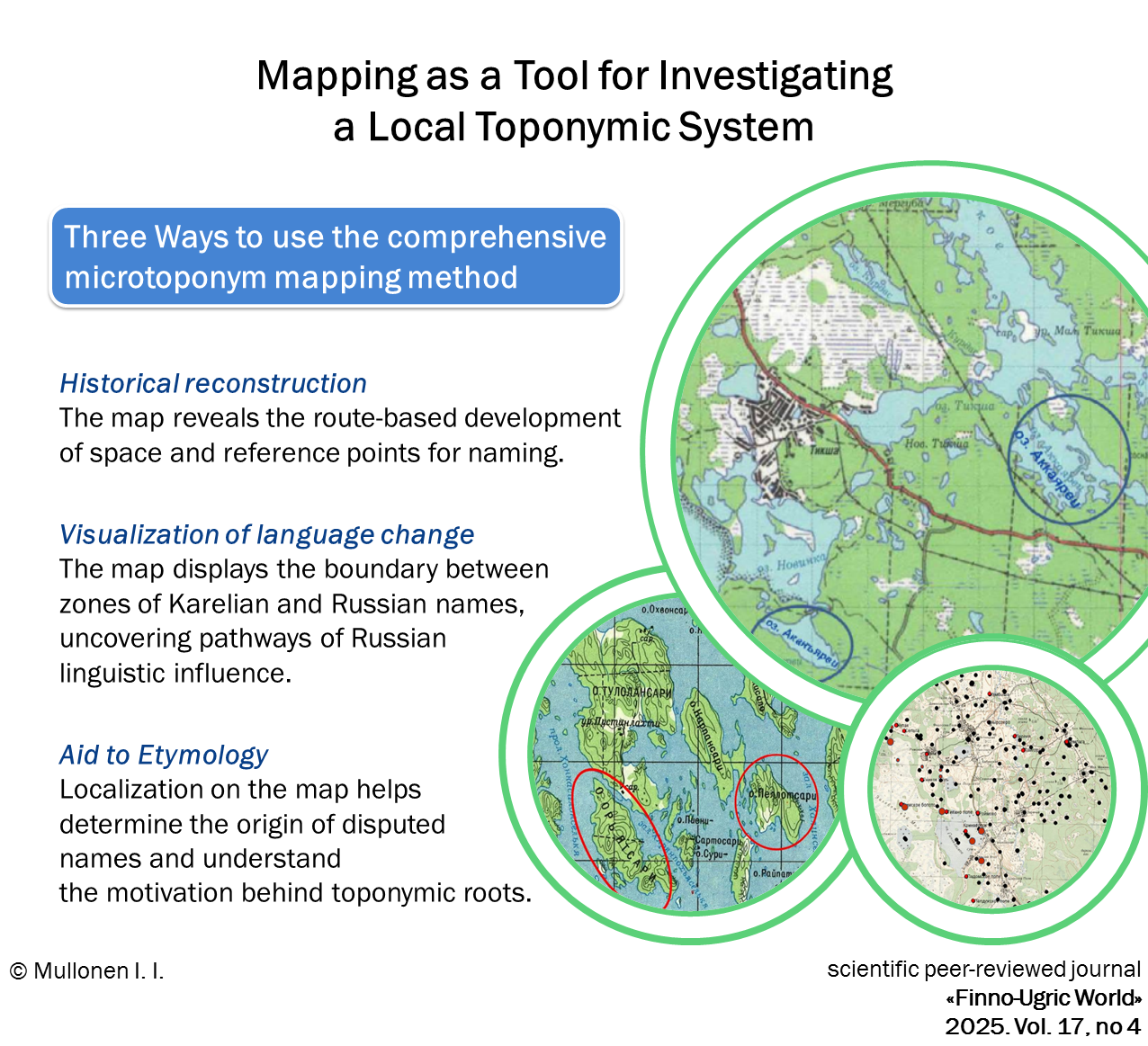
Mapping as a Tool for Investigating a Local Toponymic System
摘要
Introduction. The relevance of the cartographic method in toponymy is justified by the spatial nature of the naming process itself, which is realized within discrete geographical objects. Despite this, in studies devoted to local toponymic systems, cartographic analysis is used only sporadically. The aim of this research is to demonstrate the effectiveness of comprehensive microtoponym mapping for solving both purely toponymic tasks and broader tasks of an ethnocultural nature.
Materials and Methods. The research material was the Card Index of Karelia Toponyms, in which a significant portion of the microtoponyms are linked to topographic maps. Based on the card index data, an electronic resource – the “Toponymy of Karelia” geographic information system (GIS) – was created, which enables the mapping of toponymy within local topo-systems. The study employs maps of various formats as illustrations, ranging from standard maps of the “Atlas of Karelia” (scale 1 cm = 1 km) to field sketches and electronic maps in the OpenStreetMap format. In addition to the cartographic method itself, the methodology of etymological reconstruction and semantic analysis was employed.
Results and Discussion. This article examines three applications of the method of comprehensive microtoponym mapping. Its contribution to solving core toponymic tasks (problems of nomination) is illustrated by the route-based perspective that mapping reveals. The potential of comprehensive microtoponymic mapping for extracting ethnocultural information is also demonstrated. Through the areal distribution of microtoponyms with Russian and Karelian-derived stems, the primary routes of Russian linguistic influence into the specific local territory of the historical Vyrozero Volost in Zaonezhye are outlined. Localization is often a decisive factor in determining toponymic origin. The article demonstrates its use in establishing the Sami roots of two island toponyms (Oryatsaari and Pellotsaari), which encapsulate the idea of the islands’ position relative to the center of an island archipelago in the Ladoga region. A geographical motivation is proposed for the toponymic stem Akka- (Gen. Akan-) meaning ‘old woman’ or ‘crone’, prompted by a linguistic metaphor.
Conclusion. The method of continuous mapping of local topo-systems allows for a more in-depth understanding of the nature of toponymic nomination and also facilitates the identification of etymological, cultural-historical, and other information embedded in the localization of toponyms. In this regard, the experience of the approaches outlined in the article is useful for application in other toponymic expeditions. The research results contribute to the development of the cartographic method, as well as to the study of toponymic nomination within a local toponymic system.
430-441
The Problem of Localizing the Southern Border of the Middle Izh Dialects of the Udmurt Language: Phonetic and Dialectological Analysis

摘要
Introduction. The relevance of this study is determined by the limited scholarly attention given to the transitional dialects of the Udmurt language within Udmurt dialectology, coupled with the ongoing processes of assimilation and the levelling of dialectal features under contemporary conditions. Consequently, the task of conducting a comprehensive investigation of dialectal zones, including the delineation of the boundaries of these transitional dialects, is of paramount importance. The precise demarcation of their geographical distribution is essential not only for the description and comparison of dialectal idioms but also for the reconstruction of linguistic and historical processes characteristic of the Udmurt language. The aim of this research is to determine the southern boundary of the Middle Izh dialects, situated within the transitional area between the central dialects and the southern dialect of the Udmurt language, through the identification of their distinct phonetic and morphological features.
Materials and Methods. The empirical foundation of this study is comprised of dialectological texts collected by the author and by students of Udmurt State University across nine settlements in the Malopurginsky District of the Udmurt Republic. The methodological framework of the research incorporates synchronic-descriptive, comparative, and auditory-analytical methods. These approaches enabled the systematic recording and description of the dialects under investigation in their contemporary state, as well as a comparative analysis with other dialects of the Udmurt language. The collection of dialectological material was conducted utilizing the method of participant observation, which ensured the acquisition of representative data through the recording of speakers’ spontaneous speech in a naturalistic setting.
Results and Discussion. The analysis of dialectal data revealed that the vernaculars within the studied linguistic area generally possess a similar phonological system. However, it was established that the vernaculars of the villages of Aksakshur, Bagrash-Bigra, Gozhnya, and Kuregovo exhibit specific linguistic phenomena – such as the presence of a glottal stop and consonant voicing – which distinguish them from other dialects. These features provide a basis for their classification within the Southern dialect of the Udmurt language and allow for the demarcation of the southern boundary of the Middle Izh sub-dialects through the villages of Baysitovo, Minderovo, Kechur, and Kulaevo.
Conclusion. The author presents the first scientifically grounded delineation of the southern boundary of the Middle Izh dialects within Udmurt linguistics. This refinement of their geographical distribution provides a foundation for subsequent comprehensive study. The article constitutes a significant contribution to the field of Udmurt dialectology and, more broadly, to the general theory of Permic linguistics.
442-453
ИСТОРИЯ, ЭТНОГРАФИЯ, АРХЕОЛОГИЯ
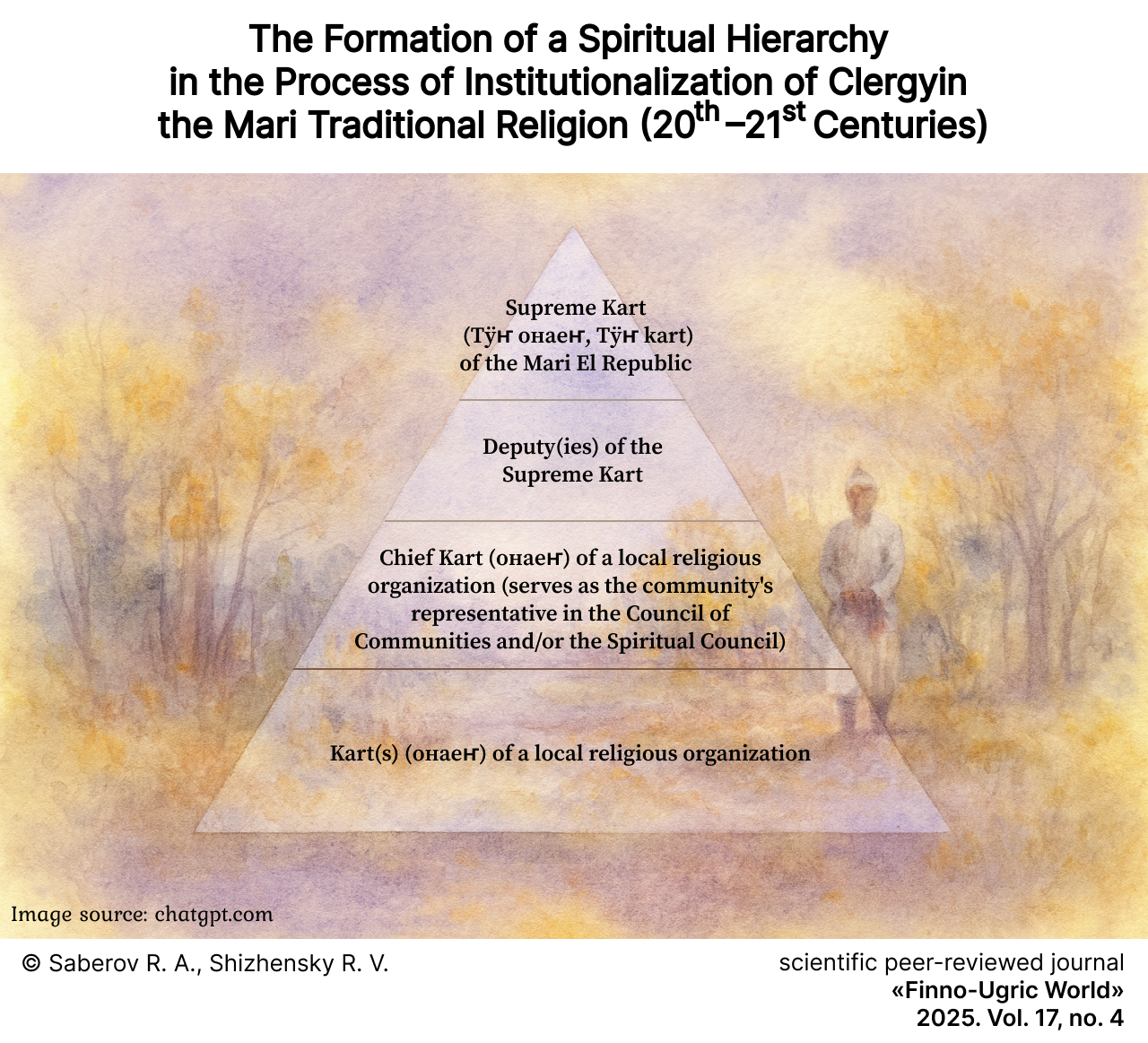
The Formation of a Spiritual Hierarchy in the Process of Institutionalization of Clergyin the Mari Traditional Religion (20th–21st Centuries)
摘要
Introduction. The organizational and legal formalization of the Mari Traditional Religion’s administrative system, which began in the 20th century, achieved legitimate status in the early 21st century with the establishment of the Centralized Religious Organization of the Mari Traditional Religion in the Republic of Mari El. A key research problem is the absence in scholarly discourse of both legal and field-based sources that reflect the evolutionary mechanisms behind the formation of the Mari ethnic religion’s organizational structure during this period. Understanding these mechanisms is essential for preserving cultural identity, ensuring the legal protection of prayer leaders, developing effective governance models, and adapting traditional practices to contemporary social and legislative realities. The aim of this study is to define the trajectory of development for the organizational and legal forms of the Mari traditional priesthood in the 21st century.
Materials and Methods. This study is based on archival records, field ethnographical materials, as well as the foundational documents of centralized organizations and local communities of the Mari traditional religion. In their work, the authors employed the principles of historicism, civilizational and systemic approaches, source analysis of documentary materials, the hermeneutic method, and the case-study method. This methodological framework enabled the identification of the specific characteristics in the development of the institution of clergy within the Mari traditional religion during the period under investigation.
Results and Discussion. The revival of the Mari traditional religion in the 1990s was accompanied by the establishment of an institutional structure and a hierarchical system of clergy. By the end of the second decade of the 21st century, a stable, multi-level hierarchical system had taken shape. This system includes the legal formalization of the clergy’s status and mechanisms for interaction with state institutions. Currently, the search continues for legal models to support and legitimize the activities of clergy serving local religious communities within the Mari ethno-religion. The findings indicate a historical continuity in the evolution of the Mari ethnic tradition and its organizational-legal forms, aligned with the objectives of harmonizing state-confessional relations in the Russian Federation.
Conclusion. Since the beginning of the 21st century, the revival of the Mari Traditional Religion in the Republic of Mari El has been characterized by a significant strengthening of its institutional structures and organizational components. By the end of the 2010s, a stable hierarchy of clerical activity had been established. This process of institutionalization is attributed not only to the legal formalization of the clergy’s status but also to the creation of an administrative apparatus within the Centralized Religious Association of the Mari Traditional Religion in the Republic of Mari El. These developments have contributed to a more structured religious system, enhancing its legitimacy and efficacy in performing religious functions. The findings of this study can inform the development of state-confessional relations at the level of constituent entities of the Russian Federation. Furthermore, they may serve as a starting point for expanding the geographical scope of research in search of new primary sources on this subject.
454-469
Statutory and Customary Law in Governing Marriage and Divorce among Pagan Populations in the Ufa Province from the Mid-19th to the Early 20th Century
摘要
Introduction. In the contemporary context, characterized by a crisis of the institutions of family and marriage, there has been a corresponding intensification of legal governance concerning matrimony and dissolution. This trend has spurred growing scholarly interest in the historical regulation of familial and marital relations by the Russian state in previous centuries, including its application among diverse ethno-confessional populations. Within this framework, an examination of the regulation of marital and divorce proceedings among the pagan communities of the Ufa province during the post-reform period is of considerable significance. Such an investigation offers critical insights not only into the evolution of domestic legislation and local pagan matrimonial customs but also helps to elucidate the distinctive features of the integration process of certain Finno-Ugric peoples into the imperial state structure. The aim of this study is to examine the regulation of marriage and divorce among the pagan population of the Ufa province (before 1865, the Orenburg province) through both imperial Russian legislation and customary law during the late imperial period (second half of the 19th and early 20th centuries).
Materials and Methods. This article is based on previously unpublished documents from central and local institutions, specifically, the Department of Spiritual Affairs of Foreign Faiths of the Ministry of Internal Affairs, the Office of the Governor-General, and the Provincial Administration, which are being introduced into scholarly discourse for the first time. The research also draws upon the Code of Laws of the Russian Empire and the Complete Collection of Laws of the Russian Empire. The study employs research methods such as the historical-genetic, historical-legal, and chronological approaches, which have made it possible to demonstrate the dynamics of the legislative regulation of marriages and divorces among pagans in the Ufa province from the second half of the 19th to the early 20th century, as well as the changes that occurred in the customary legal practices of this sphere. The comparative-historical method was used to illustrate the differences between the status of pagans and that of other confessions.
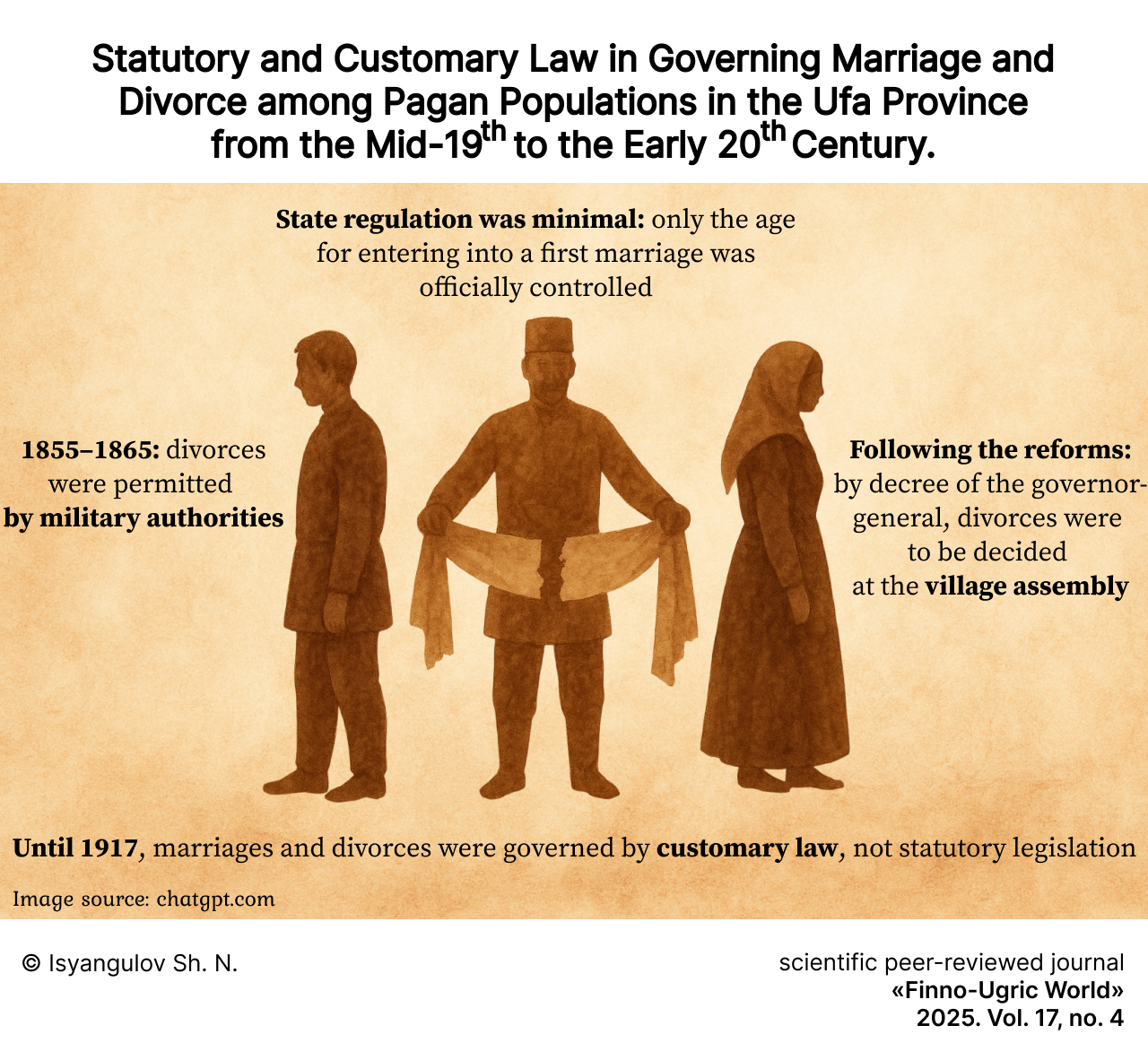
Results and Discussion. The predominant role of customary law norms in regulating marriage and divorce among pagans has been identified. From a legislative standpoint, the marital and family relations of pagans in the Ufa Province during the post-reform period were regulated relatively weakly: only the age for entering a first marriage for young men and women was subject to regulation. The incorporation of pagans into the Bashkir Host in 1855 implied strict control over their family life. In particular, it was the military command during the cantonal period of administration (1855–1865) that granted permission for divorce. This period also marked the beginning of the transition to legal regulation of marital and family relations among the local pagans. During the post-reform period, divorces, by order of the Governor-General, were to be decided at a village assembly. In practice, decisions on divorce, with the consent of both parties, were made by a council of elders; in the absence of such consent, the matter was resolved by the village assembly. In legal terms, until 1917, the marriages and divorces of pagans in the Ufa Province remained unregulated by statute: matrimony and divorce proceedings were primarily governed not by laws, but by local by-laws, which often contradicted official law. State intervention in the sphere of marital and family relations remained minimal.
Conclusion. The author’s conclusions provide a more profound insight into the politico-legal status of pagans in the Ufa Governorate within the Russian Empire from the mid-19th to the early 20th century, revealing the dynamics of legislation and customary legal practices in the sphere of family and marital relations among the local pagan population. The obtained results contribute to the further study of policy regarding family and marriage among the Finno-Ugric peoples of the region and the country.
470-480
The Udmurt Ritual Belt “Zar” and Its Tripartite Composition: A Semantic Inquiry
摘要
Introduction. In the contemporary, rapidly changing world, the process of globalisation inevitably leads to the erosion of ethnic distinctiveness and the unique features of individual cultures. Consequently, the examination of national traditions and cultural values acquires particular significance. This article examines the semantics of the tripartite composition of the Udmurt ritual belt, known as the “zar”. Primary focus is given to the social processes reflected in mythological narratives and folk art, including so-called “textile folklore” – the patterns of traditional embroidery. The aim of the research is to analyse the semantics of the embroidered composition of the “zar” ritual belt.
Materials and Methods. Traditional costume and its ornamentation possess a semiotic nature; consequently, this study employs a semiotic approach, which entails three analytical aspects: syntactics, pragmatics, and semantics. The historical-genetic method was utilized to examine the phenomenon within its historical development, alongside methods of aesthetic anthropology, which investigates the meaning-generating functions of art.
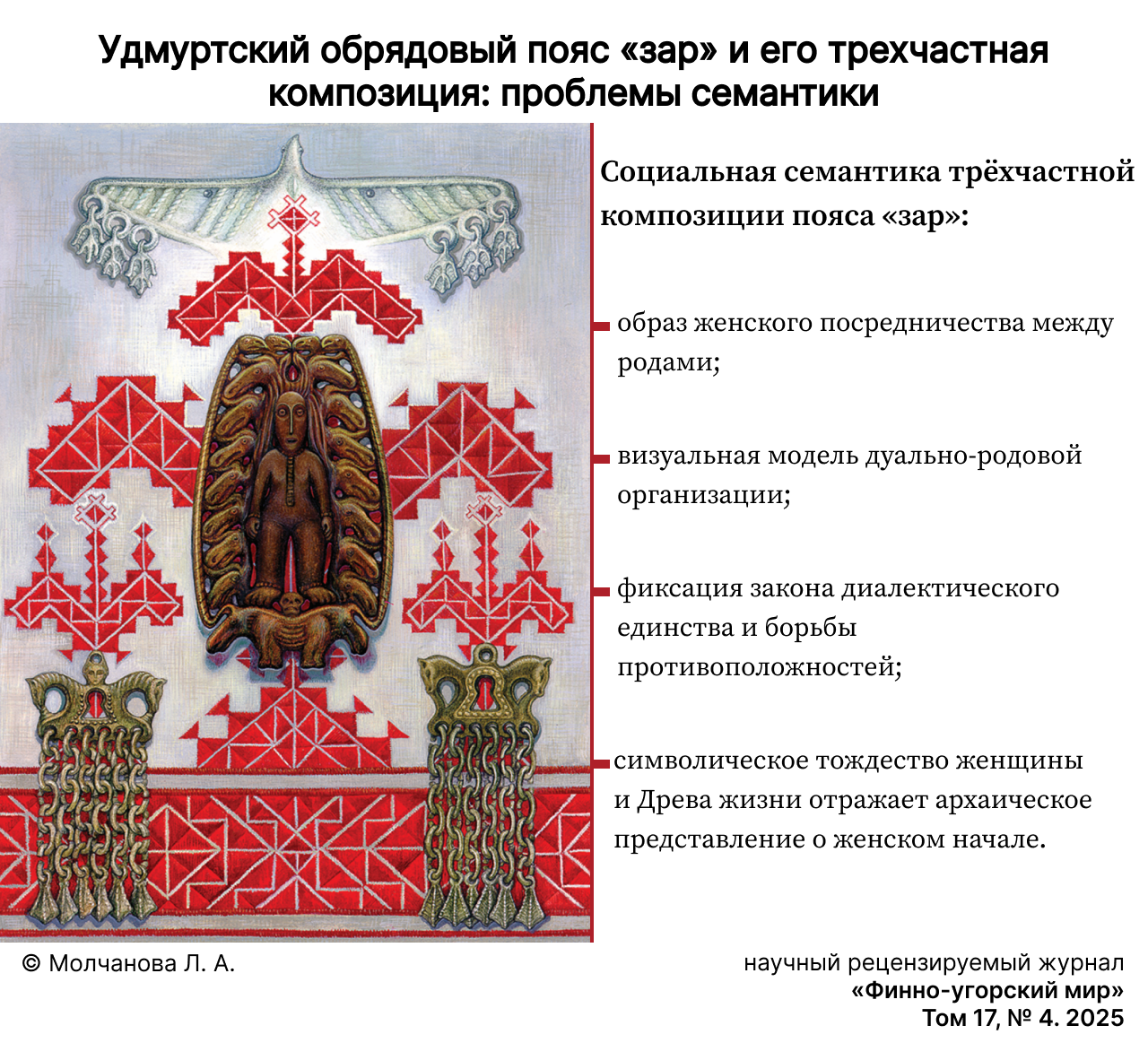
Results and Discussion. The tripartite composition featuring a central female figure constitutes one of the fundamental ornamental schemas in traditional applied arts. This schema is characterized by a central figure flanked on both sides by two secondary ones. To reveal the profound semantics of this composition, the author turns to the dawn of human history, a period when the archetypes that later formed the basis of universally prevalent mythological, folkloric, and ornamental narratives were first germinating and taking shape. The stages in the formation of the dual-clan organization – the first human community – are examined. It is precisely this “social substance” that is reflected in the symbolism of the tripartite composition.
Conclusion. This article examines the ornamental scheme and narrative depicted in the three-part composition traditionally embroidered on the ritual belt known as a zar. The research will prove valuable to historians, ethnographers, art historians, and those with a general interest in folk art. The findings can be utilised in the preparation of general works on the history and theory of Finno-Ugric folk art, the development of specialised courses on Udmurt ethnography and traditional art within educational institutions, the creation of museum exhibitions, and the design of contemporary apparel featuring ethnic motifs.
481-495
Ethnodemography
Trends in Urbanization Processes in the National Republics of the Ural-Volga Region During the Late 20th and Early 21st Centuries
摘要
Introduction. Urbanization constitutes a significant factor shaping the contemporary state and future trajectories of a nation’s demographic and social development. The consequences of urbanization processes include the expansion of cities, the intensification of agglomeration trends, and alterations in the size, distribution, and composition of the population. The latter is of particular relevance for the Indigenous peoples of the national republics of the Ural-Volga region – specifically the Finno-Ugric and Turkic groups – who experienced a relatively late integration into the urban milieu. The objective of this research is to identify the key patterns in the distribution, dynamics, and proportion of the urban population within the national republics of the Ural-Volga region from the second half of the 20th century to the early 21st century. This article provides a novel comparative analysis of urbanization processes, examining both the general population and the Indigenous peoples of these republics through an ethnic lens for the period under review.
Materials and Methods. Using descriptive statistics, the author analyzes data from the 1989, 2002, 2010, and 2020 Soviet and Russian national censuses, current demographic records, and regional strategic planning documents to identify key trends in agglomeration processes. The analysis focuses on six national republics of the Ural-Volga region: those with indigenous Finno-Ugric (Mari El, Mordovia, Udmurtia) and Turkic populations (Bashkortostan, Tatarstan, Chuvashia).
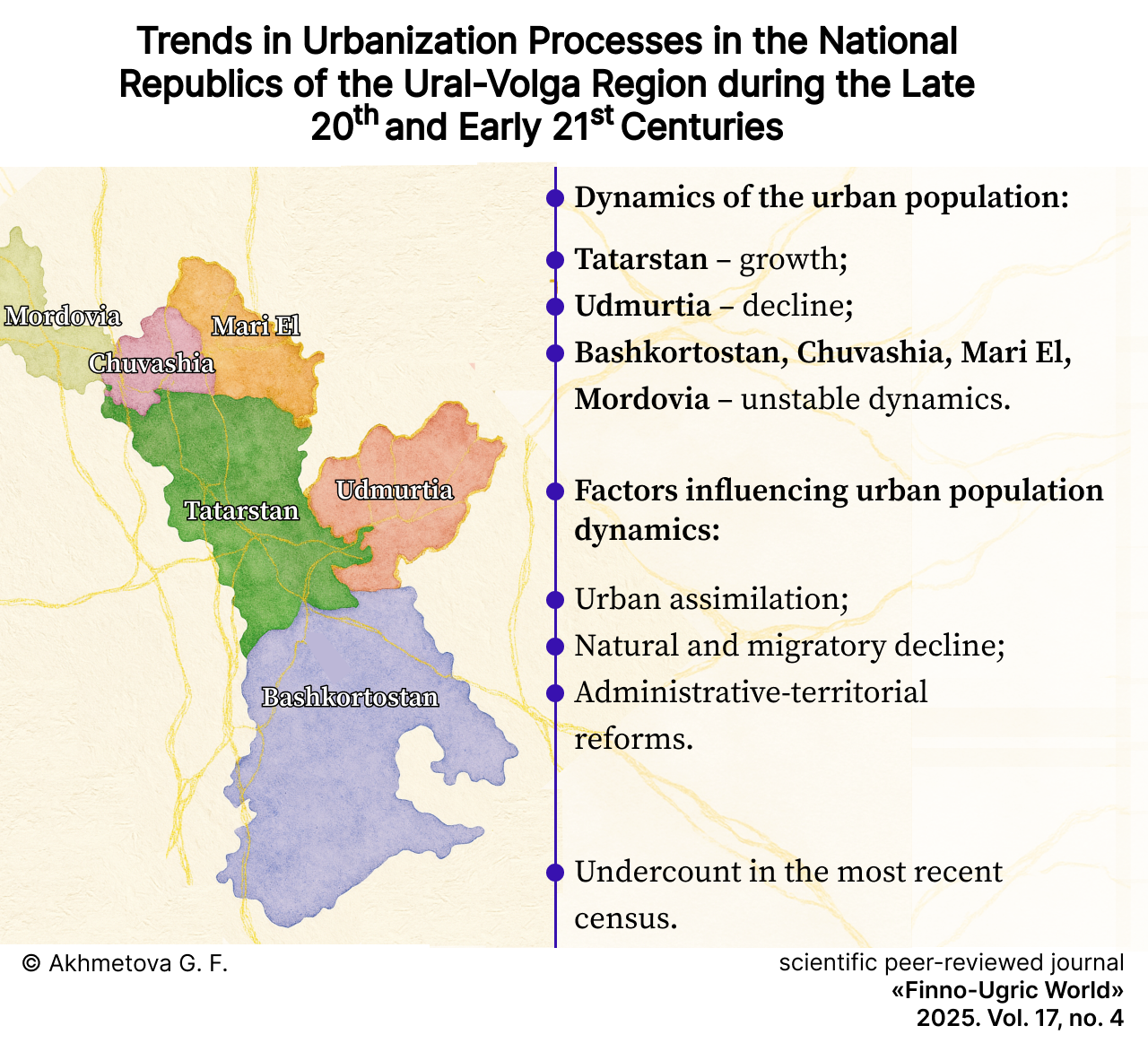
Results and Discussion. The republics under examination exhibit a center-periphery pattern in the development of their urban settlement networks. A distinct group of core cities has emerged, situated within the most socio-economically advanced territories of these republics, where agglomeration processes are underway. The distribution of the urban population reflects a pan-Russian trend of population concentration in major cities, regional capitals, and agglomerations. The national republics are distinguished by the specific dynamics in the scale and level of urbanization, observable for both the total population and the titular ethnic groups. The Republic of Tatarstan and the Udmurt Republic exemplify two contrasting trends: the former demonstrates a consistent increase in both the size and proportion of the urban population, whereas the latter experiences a decline. In the remaining republics, the dynamics of absolute and relative urbanization metrics are less stable, with periods of growth periodically alternating with decline, and vice versa; the nature of these changes can vary significantly.
Conclusion. A comparative regional analysis of these issues allows for an examination of how specific regional and ethnic populations are integrated into the urban milieu. This approach is instrumental in identifying prospects for socio-demographic development and in devising effective policy mechanisms for national, social, and demographic governance, aimed at safeguarding demographic potential during urbanization.
496-512
Review
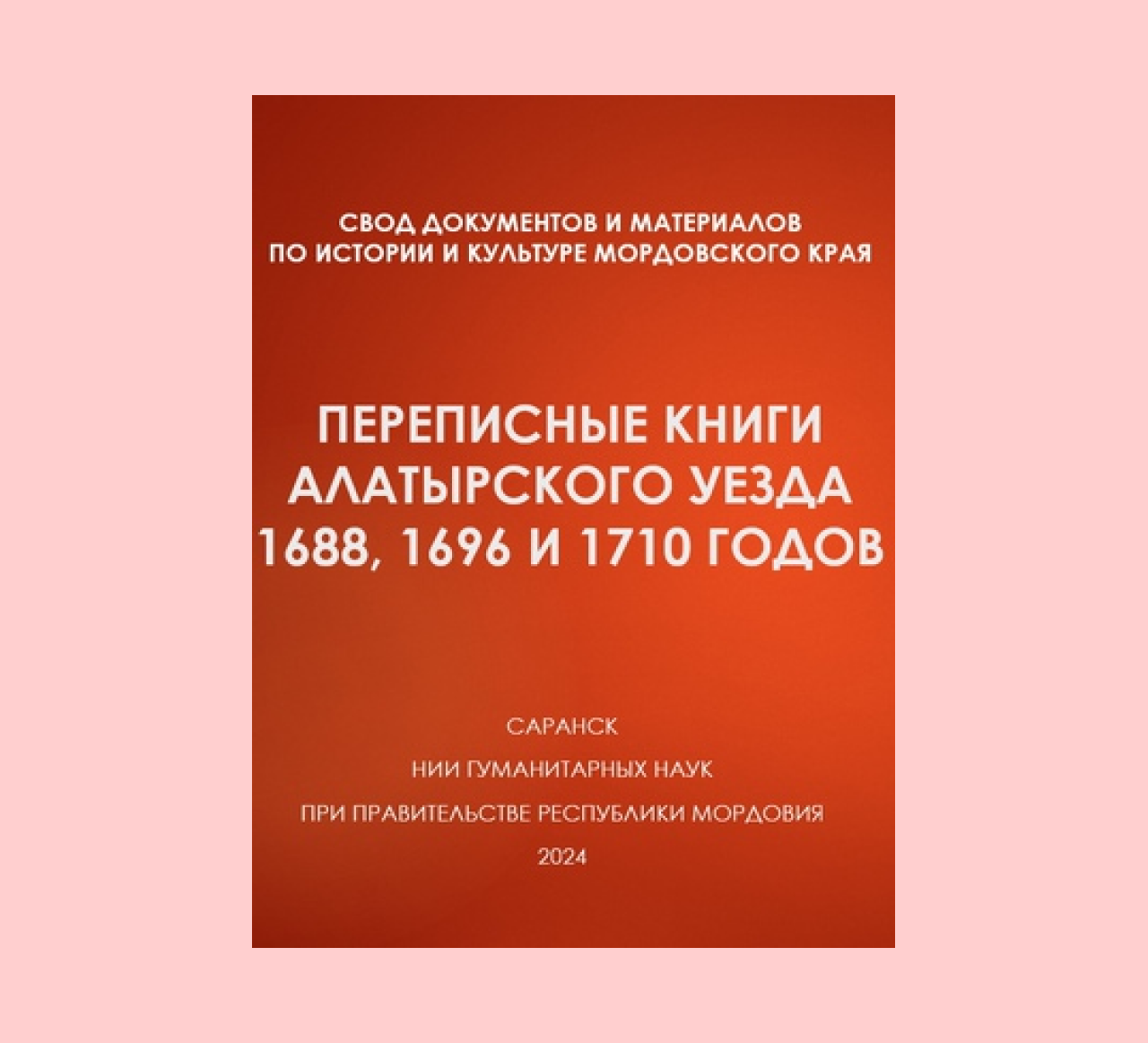
The Historical Legacy on the Pages of Census Books
摘要
This review is devoted to a significant event in the historiography of the Mordovian region: the 2024 publication of the set of census books from the Alatyr district, dating from the late 17th to the early 18th century, prepared by historians V. D. Kochetkov, S. V. Vidiaykin and O. I. Mariskin. The volume comprises the “Census of Prince Vasily Putyatin of the Year 196 (1688)”, the “Census Book of the Year 7204 (1696) by Stolonik and Voyevoda Semyon Fyodorovich Griboyedov, of Mordovian Villages in Alatyr District”, and the “Census and Tax Assessment Books by Stolonik Prince A. A. Bolkhovsky of Russian Peasants in Villages and Hamlets of Alatyr District, Settled on Abandoned Mordovian Lands” (1710). The publication of these primary sources opens new avenues for an in-depth examination of the region’s socio-economic processes within the context of Petrine reforms. This edition has been made possible through funding from the Talina Social Projects Support Foundation (founded by V. S. Biryukov) as part of the patriotic socio-cultural project “In the Name of the Future!”.
513-515