





卷 33, 编号 4 (2025)
- 年: 2025
- ##issue.datePublished##: 24.12.2025
- 文章: 10
- URL: https://journals.rcsi.science/2413-1407/issue/view/19878
完整期次

International Relationships
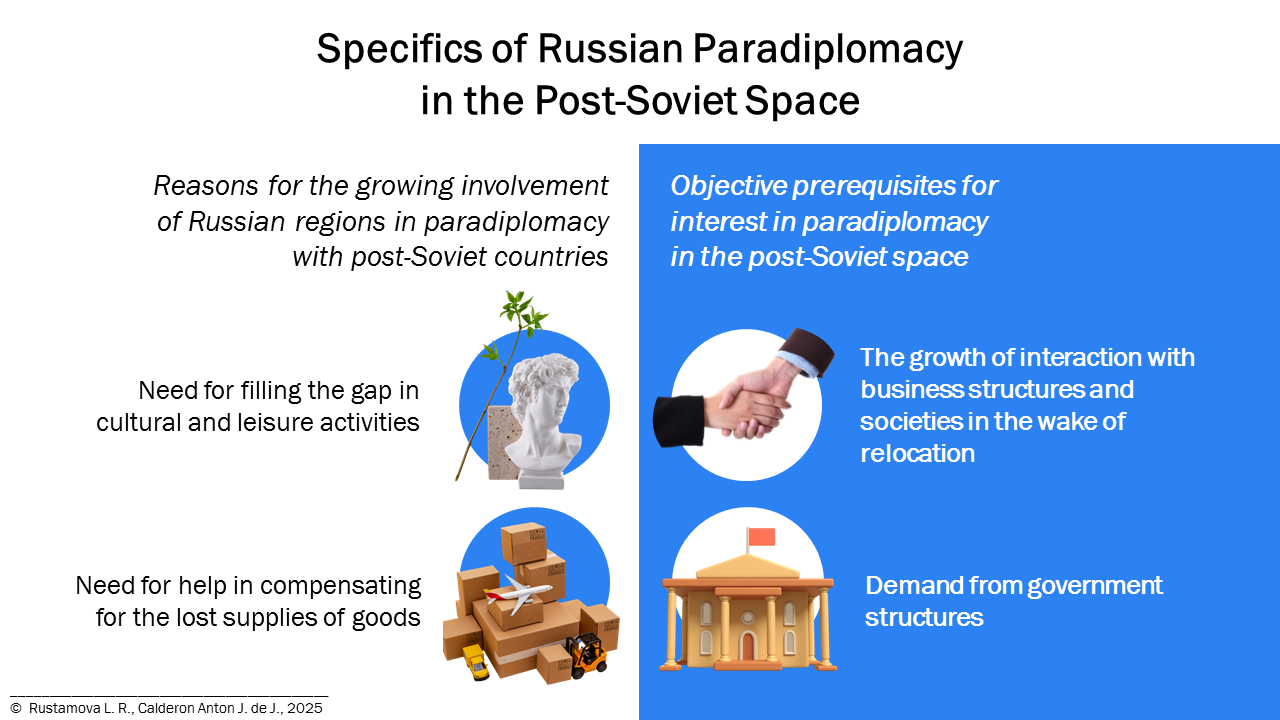
Specifics of Russian Paradiplomacy in the Post-Soviet Space
摘要
Introduction. The start of a special military operation in 2022 led to a rethinking of the priorities for the development of subnational foreign relations and an aggravation of the problem of lack of interaction with Russia's closest partners, the former territories of the USSR, which actualizes the study of the features of the paradiplomacy in the post-Soviet space. The purpose of the article is to study the specifics of paradiplomatic relations with the regions of the former Soviet republics and their participation in the development of integration processes.
Materials and Methods. The empirical basis of the study was formed by the available publications on the topic of interregional relations, the main documents regulating paradiplomatic relations, as well as materials from the websites of the Ministry of Foreign Affairs of the Russian Federation, institutional platforms through which external relations between regions and cities are carried out. The following methods are applied: historical and descriptive, comparative and qualitative content analysis.
Results. It has been revealed that the transition of the regions from solving purely practical development issues within the framework of a paradigm shift to participating in integration projects began after the growing interdependence required progressive movement towards the introduction of further mechanisms for the freedom of movement of people, goods and services. After 2022, the regions became more actively involved in paradiplomacy with the countries of the former Soviet Union, because they could help compensate for the lost supplies of goods, as well as fill the gap in cultural and leisure activities. It is determined that the objective prerequisites for interest in paradiplomacy in the post-Soviet space were the growth of interaction with business structures and societies in the wake of relocation, as well as demand from government structures.
Discussion and Conclusion. The events of 2022 showed that there are significant limitations to paradiplomacy as a tool for influencing international relations, but it is a real tool for moving integration from below, through the involvement of local governments in solving common problems in the field of governance, socio-economic and problems related to cross-border threats in the post-Soviet space. The factors of trust in regional players as intermediaries of integration are the participation of representatives of non-governmental structures in projects of paradiplomacy, their focus on solving common development problems, taking into account territorial specifics. The results of the work can form the basis for further research, and will also be useful in developing foreign policy decisions by ministries and departments responsible for regional foreign relations in the post-Soviet space.
 578-593


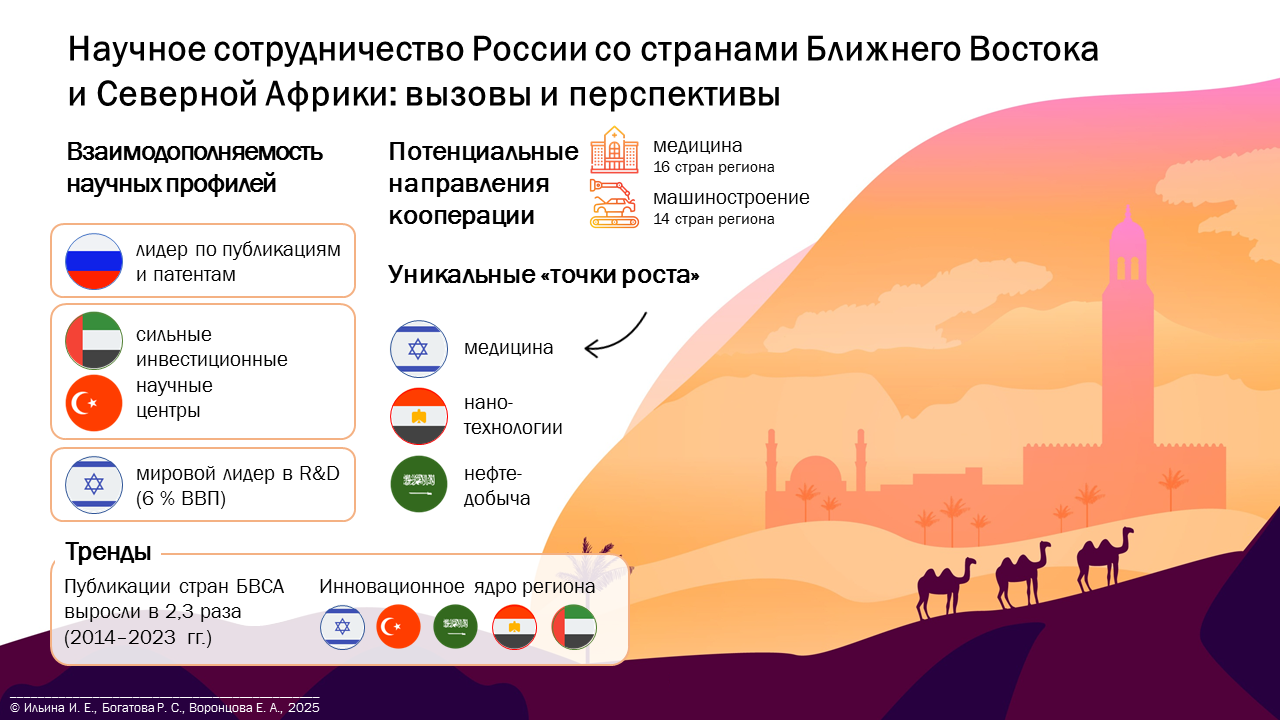
Scientific Cooperation between Russia and the MENA Countries: Challenges and Prospects
摘要
Introduction. Despite Russia’s significant scientific and technical potential, its influence in the Middle East and North Africa (MENA) region remains limited due to insufficient integration into international research projects, a low share of joint scientific publications, and undeveloped science diplomacy. The purpose of this study is to identify key areas and mechanisms that could expand Russia’s scientific cooperation with MENA countries and strengthen its position in the region’s science and technology sphere.
Materials and Methods. The research is based on statistics from international organizations (UNESCO, WIPO, World Bank), the international patent database ORBIT Intelligence, scientific citation databases Scopus and Web of Science, as well as data from national scientific agencies and ministries of education and science of the region’s countries. The study employs comparative and structural analysis, bibliometric analysis of publications and patents, and data visualization in Excel to reveal collaboration networks.
Results. The study found that MENA countries and Russia have potentially complementary scientific and technological profiles. Trends in scientific research in the Middle East and North Africa were characterized. Potential opportunities for cooperation were identified – in oil extraction with Saudi Arabia, in medicine with Israel, and in nanotechnology with Egypt. Promising areas for Russia’s cooperation with MENA countries include medicine (across 16 countries) and mechanical engineering (across 14 countries)
Discussion and Conclusion. The practical significance of the study lies in identifying growth points for Russia’s science diplomacy: the development of joint competence centers and laboratories, and the expansion of participation in joint research projects confirm the need for a systemic approach to advancing Russia’s international scientific cooperation with MENA countries. The results can be used to formulate practical recommendations for strengthening bilateral and multilateral scientific ties, developing sustainable partnership formats, and establishing a long-term infrastructural basis for cooperation.
594-614
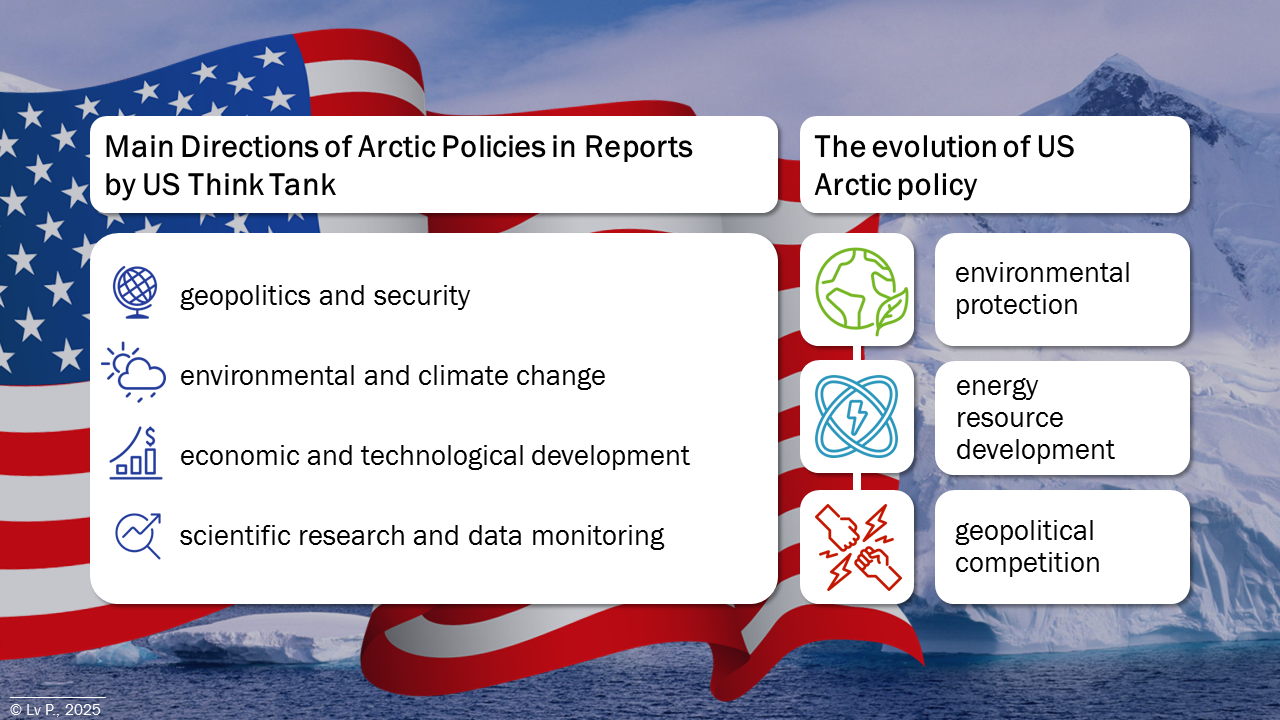
Main Directions of Arctic Policies in Reports by US Think Tank
摘要
Introduction. Against the backdrop of escalating conflict in Ukraine and deepening Russian-Chinese cooperation in the Arctic, US policy is demonstrating new trends. The aim of this study is to identify the main stages in the evolution of US Arctic policy, as well as its key thematic areas.
Materials and Methods. This study applies the BERTopic and DTM models for topic modeling and dynamic analysis of 918 o൶ cial policy documents (such as strategies, doctrines, directives, and reports) and research reports published by government agencies and think tanks from 2005 to January 2025.
Results. The main topics of reports on US Arctic policy focus on four areas: geopolitics and security, environmental and climate change, economic and technological development, and scientific research and data monitoring. Dynamic thematic modeling further revealed the evolution of Arctic policy and reports by US think tanks, which went through stages of transition from environmental protection to energy resource development and then to geopolitical competition.
Discussion and Conclusion. Against the backdrop of deepening Russian-Chinese cooperation in the Arctic and the escalating conflict in Ukraine, the US is consistently strengthening security in cooperation with its allies and increasing its military presence in the region. Looking ahead, US Arctic policy will focus on competition between leading powers, energy security, and technological innovation, driven by the need to respond to growing challenges in international security and global governance. Understanding these trends is of key practical importance for experts and policymakers in Russia and other interested countries, as it enables them to formulate more accurate forecasts and develop effective responses to changes in US Arctic strategy.
615-633
Regional and Sectoral Economy
The Impact of Sanctions on Sustainable Development Strategies of Oil and Gas Companies: A Comparative Analysis of Russian and International Experience
摘要
Introduction. Oil and gas companies are actively integrating sustainable development principles into their strategic and program documents, striving to achieve carbon neutrality in the long term. However, under sanctions restrictions, they are forced to revise the priority areas of their sustainable development strategies. The purpose of this study is to analyze the impact of sanctions on the indicators and results of the implementation of sustainable development strategies by Russian and foreign oil and gas companies.
Materials and Methods. We analyzed annual reports and sustainability reports from leading international and Russian oil and gas companies, examining greenhouse gas emissions, hydrocarbon production volumes, and expenditures on achieving sustainable development goals for the period 2019–2023, and establishing the relationship between these indicators. A comparative method allowed us to identify key aspects of implementing sustainable development strategies at leading international and Russian oil and gas companies before and after the sanctions.
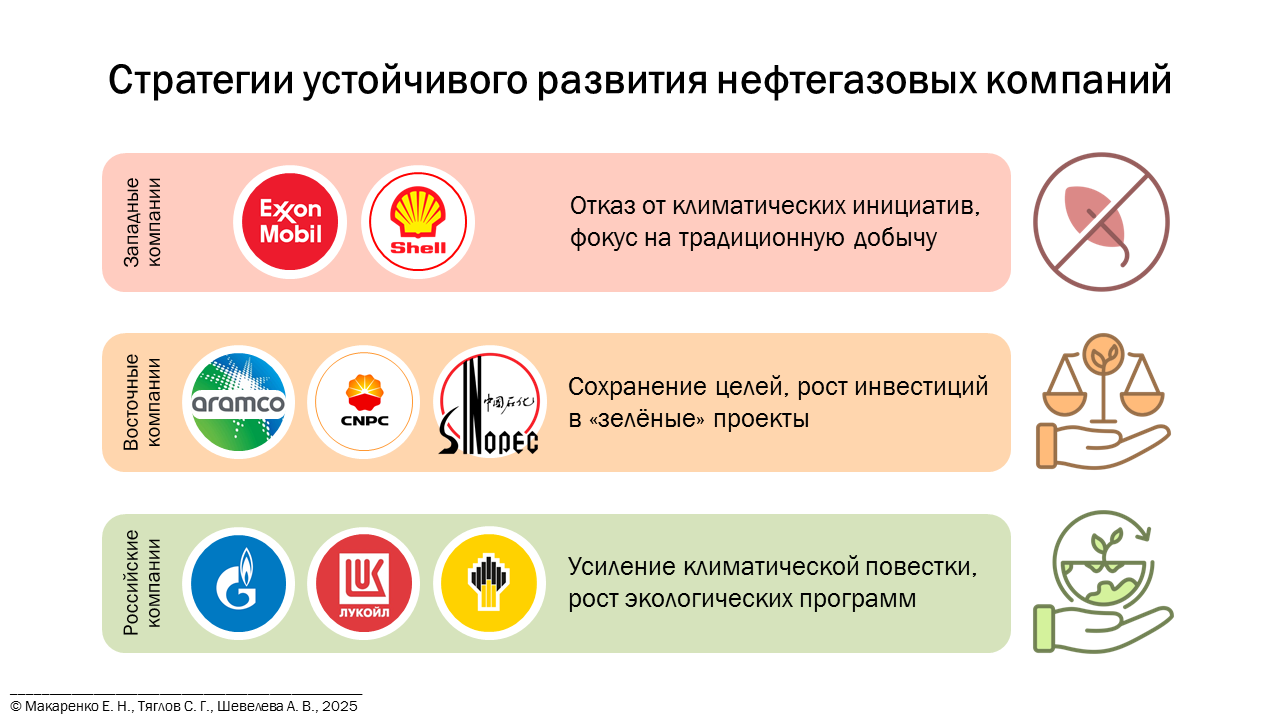
Results. Foreign companies in developed countries are revising their sustainability priorities, abandoning a number of climate initiatives in favor of intensifying traditional hydrocarbon production and securing shareholder returns. Companies in China and Saudi Arabia are trying to stick to their original sustainable development goals, but the growth in costs to achieve them is outpacing the increase in hydrocarbon production and corresponding emissions. Russian companies are updating their sustainable development goals to focus more on the climate agenda.
Discussion and Conclusion. Under sanctions, sustainable development strategies are essential to balance the interests of all stakeholders: shareholders, company management, the state, and society. The results of this analysis have practical significance for companies that are just beginning to integrate environmental goals into their development strategies, as well as for government agencies developing low-carbon development policies.
634-658
Assessing the Impact of the Tourism Industry on Regional Economic Growth During Periods of Systemic Restrictions and Recovery
摘要
Introduction. In the context of global crises such as the COVID-19 pandemic and increased geopolitical tensions, traditional drivers of economic growth often lose their effectiveness. In this context, the tourism industry, demonstrating high adaptability due to the growth of domestic and independently organized tourism, is becoming a potential stabilizing factor and a source of regional development. The purpose of this study is to empirically assess the impact of tourism development on the economic growth of Russian regions during the period of significant restrictions (2019–2022) in order to form strategic decisions in the field of sectoral policy.
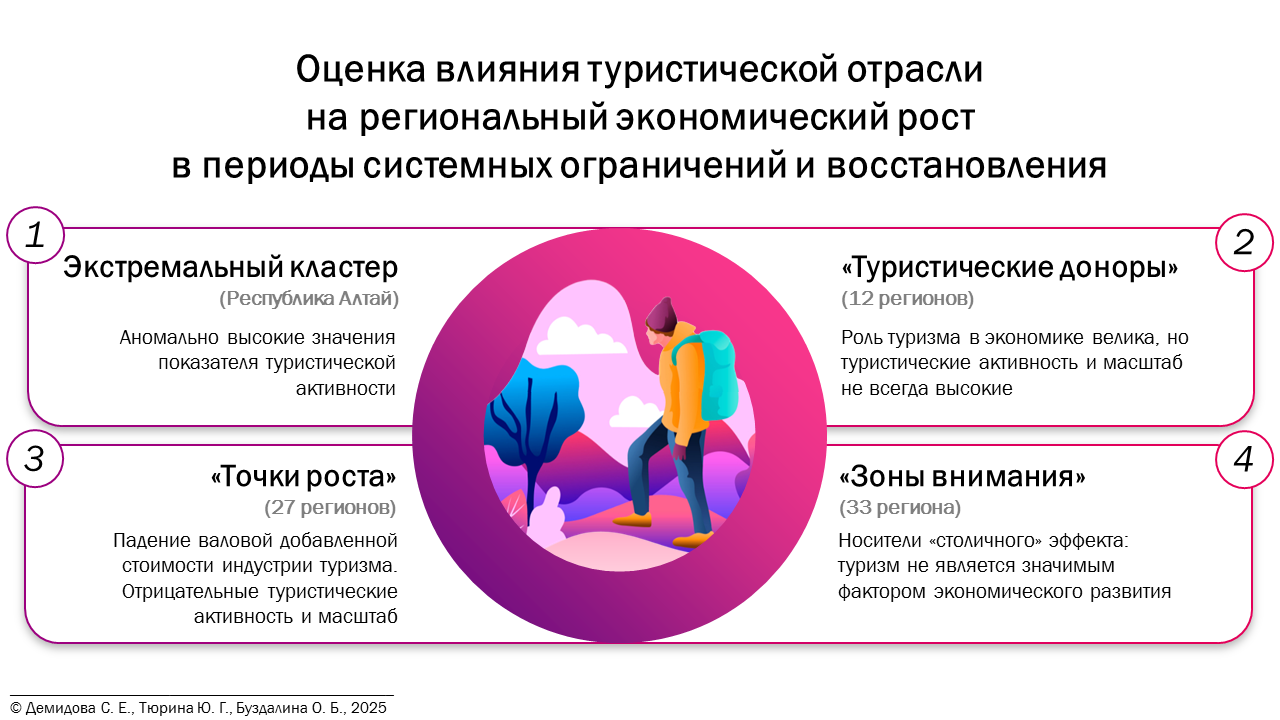
Materials and Methods. The empirical basis of the study was Rosstat's annual panel data on 84 regions of the Russian Federation over a four-year period covering both the pre-crisis stage and the phases of active restriction and recovery. To test hypotheses and quantify relationships, a set of econometric analysis methods was applied, including the evaluation of pooled regression models with fixed and random effects. The Hausman test was used to verify the results. Additionally, in order to identify stable typological patterns, clusterization of regions was carried out using the k-means method for the dynamics of key indicators of tourist activity and economic development. 4 types of regions were identified: Republic of Altai with extreme indicators; 12 “tourist donors”; 27 regions with “growth points”; 33 “attention zones”.
Results. Econometric modeling revealed a statistically significant positive impact of tourist activity on the gross regional product. The analysis showed that the variation in tourism development explains about 34 % of the variation in regional economic growth. According to the tests, the best specification (a model with random effects) confirmed the importance of not only a generalized indicator of tourist activity, but also the scale of the tourism industry, measured as gross value added.
Discussion and Conclusion. Tourism demonstrates resilience to crisis shocks, but its contribution to economic growth is heterogeneous across regions. The effectiveness of traditional fiscal support tools has been limited. The results substantiate the need for a differentiated regional policy, shifting the focus from tax benefits to infrastructural development, taking into account the specifics of the selected clusters. The prospect of further research is to expand the time series and include additional factors in the analysis, such as the specifics of the tourist flow and digitalization of tourist services, and the environmental sustainability of destinations.
659-677
Innovative Rating of Regions in the Electronic Industry: Construction and Verification Using Machine Learning
摘要
Introduction. The development of the radio-electronic industry is a priority for Russia's technological leadership, necessitating modern tools for assessing the innovative potential of its regions. This study aims to construct and verify an innovative rating of regions for the radio-electronic industry that overcomes the limitations of traditional ratings by applying machine learning to Big Data.
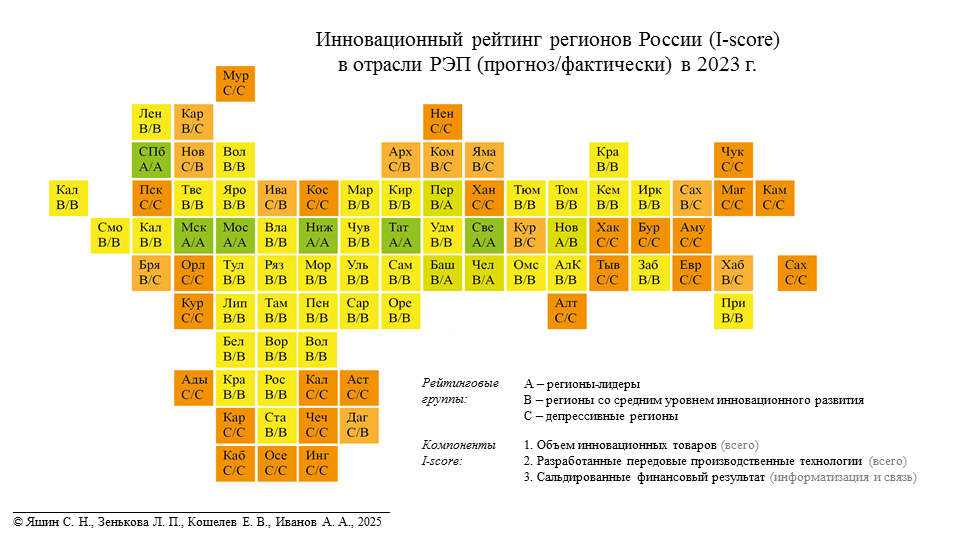
Materials and Methods. A training dataset was formed based on Rosstat data from 2010–2022 for 83 regions. Using ensemble machine learning methods (Fine Gaussian SVM, Bagged Trees, Random Forest), a classification model was constructed that assigns innovative ratings (A – leaders, B – average level, C – depressed) to regions based on three target functions, with subsequent aggregation into an integral I-score. A key stage of the research was the model approbation: its verification was carried out on independent data for 2023 that was not part of the training set.
Results. The verification confirmed the model's practical applicability: the accuracy of the integral I-score rating prediction on new data was 81.93 %. Based on the approbation results, a current map of innovative ratings was constructed. The leading regions (A) in 2023 were the Moscow Region, Moscow, St. Petersburg, Republic of Tatarstan, Nizhny Novgorod Region, and Sverdlovsk Region. Analysis of discrepancies between prediction and fact revealed growth potential for Novosibirsk Region and potential risks to the leading positions of Republic of Bashkortostan, Perm Territory, and Chelyabinsk Region.
Discussion and Conclusion. The approbated methodology enables the construction of accurate and robust assessments of the innovative development of regions in the radio-electronic industry. The verification results demonstrate not only the model's predictive power but also its value for identifying latent trends. The findings are of practical importance for public authorities and large companies in planning regional and sectoral policies.
678-696
Assessing the Effectiveness of the Russian Transport System: Analysis of Dynamics and Development Prospects
摘要
Introduction. The efficiency of the Russian transport sector, characterized by its vast territory and advantageous geographic location between Asia and Europe, is determined by the state of its infrastructure. The purpose of this study is to assess the efficiency of the Russian transport sector and formulate measures to improve the state of its transport infrastructure.
Materials and Methods. The study focused on Russia's transportation system, broken down by mode (road, rail, and air). The database consisted of Rosstat data for 2000–2023. The analysis of Russia's transportation system development dynamics was conducted using the index method with standardization based on the Mazziotta–Pareto index. A transport system efficiency index, developed based on standardized indicators, was applied.
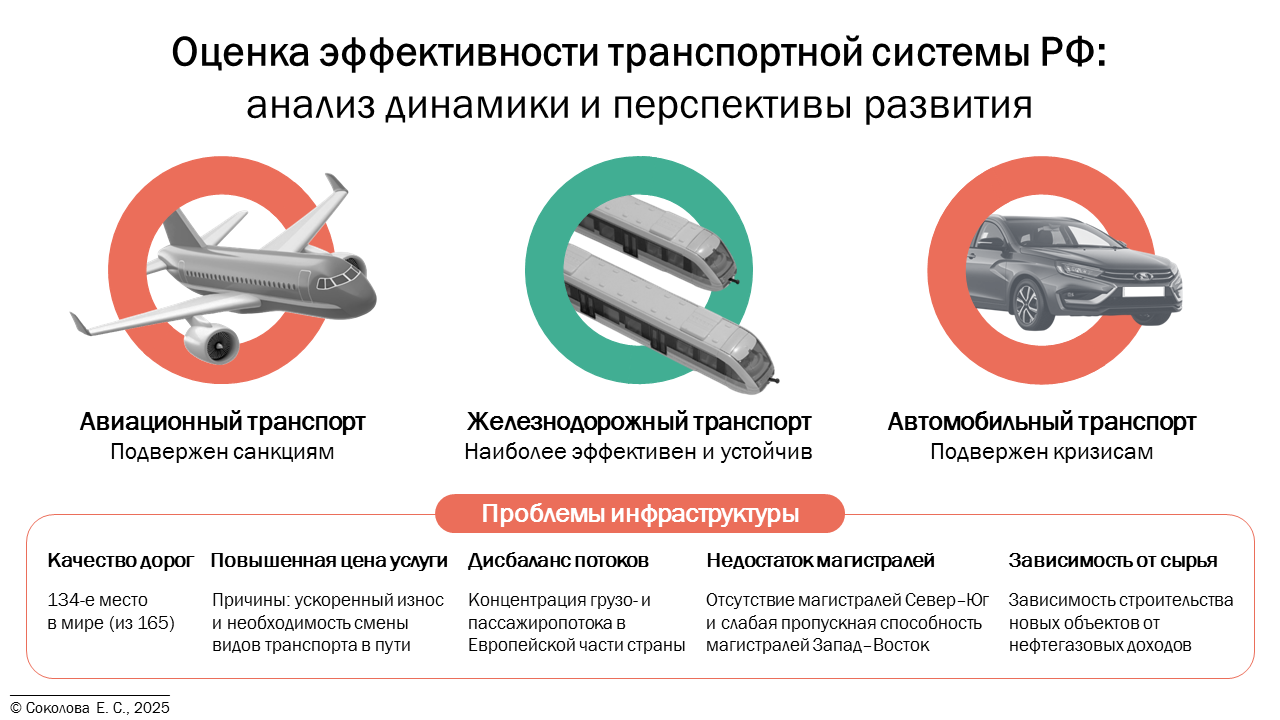
Results. Overall, the Russian transport system meets domestic demand for transportation services. Exports of such services are limited not so much by the length of routes and the resulting high cost of transportation, but by the inefficiency of the system itself. Railroads remain the most efficient, while road and air transport are subject to sanctions and risks. The need for a new financing system for the development of Russia's transport system, based on the allocation of surplus revenues and their investment in transport development, is justified. It is proven that the potential efficiency of the Russian transport system is not being fully utilized.
Discussion and Conclusion. The novelty of the obtained results lies in the author's proposed approach to assessing the effectiveness of existing infrastructure and measures for its development, the implementation of which could lead to increased competitiveness of Russian transport services in the global market. Of interest to government agencies is the proposal to stimulate investment in transport infrastructure through the allocation of oil and gas revenues.
697-714
Social Structure, Social Institutes and Processes
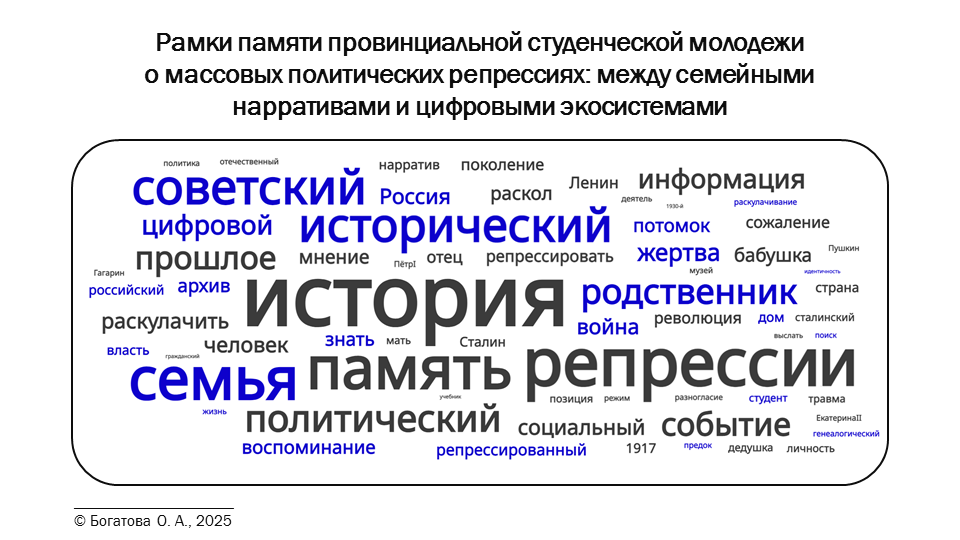
The Frames of Provincial Student Youth's Memory of Mass Political Repression: between Family Narratives and Digital Ecosystems
摘要
Introduction. The relevance of this study stems from the political use of difficult memories in contemporary Russian discourse and the lack of research on the memories of the centennial generation regarding mass political repression during the Soviet period. The aim is to characterize the scope of centennials' memories of repression in family history, taking into account the sources available to them, technologies for accessing information, and the interaction of family memories with the official memory regime.
Materials and Methods. The empirical basis of the article is based on quantitative (online questionnaire survey of students of universities and colleges of the Republic of Mordovia, n = 700, multi-stage combined sample) and qualitative (30 in-depth interviews with students of the National Research Mordovia State University of various fields of study) sociological research conducted in 2023.
Results. The main sources (including oral recollections of family members, textbooks, artistic and popular science films and literature, traditional and digital archives, thematic websites) and technologies for accessing information about mass political repression have been identified. It has been shown that, when motivated, students use neurosearch, digital archives, and genealogical websites (MyHeritage, Geni.com) to fill in gaps in their knowledge about their family's past. Forms of incorporating family memories into the public narrative (local history competitions, publications, museums) have been identified. The typological characteristics of the mnemonic behavior of centenarians are defined: pluralistic agonism or avoidance of mnemonic conflicts. The mode of communication about the Soviet past is characterized as pluralistic and pillarized, generally corresponding to the dominant historical narrative, which condemns political repression but avoids assessments of the Soviet period as a whole. The prevailing methods of managing the content and structure of family memory about repression are revealed: individualization of family history, historicization in the form of deactualization or meta-historical reflection, and the construction of one's own narrative of national history (among history students).
Discussion and Conclusion. The study questions the universal value of the concept of transgenerational trauma, showing that the discussion of family memories among centenarians is based on a choice between agonistic and evasive attitudes. This allows us to characterize the mode of communication about repression as divided but not split. The results confirm the validity of the relational approach and point to the need for its application in further generational studies, as well as the importance of studying the social factors of framing family memories in the process of their transformation into “post-memory”.
715-734
Public Values in Youth Assessments: An Empirical Study of Perceptions of the Activities of Civil Servants in the Sverdlovsk Region
摘要
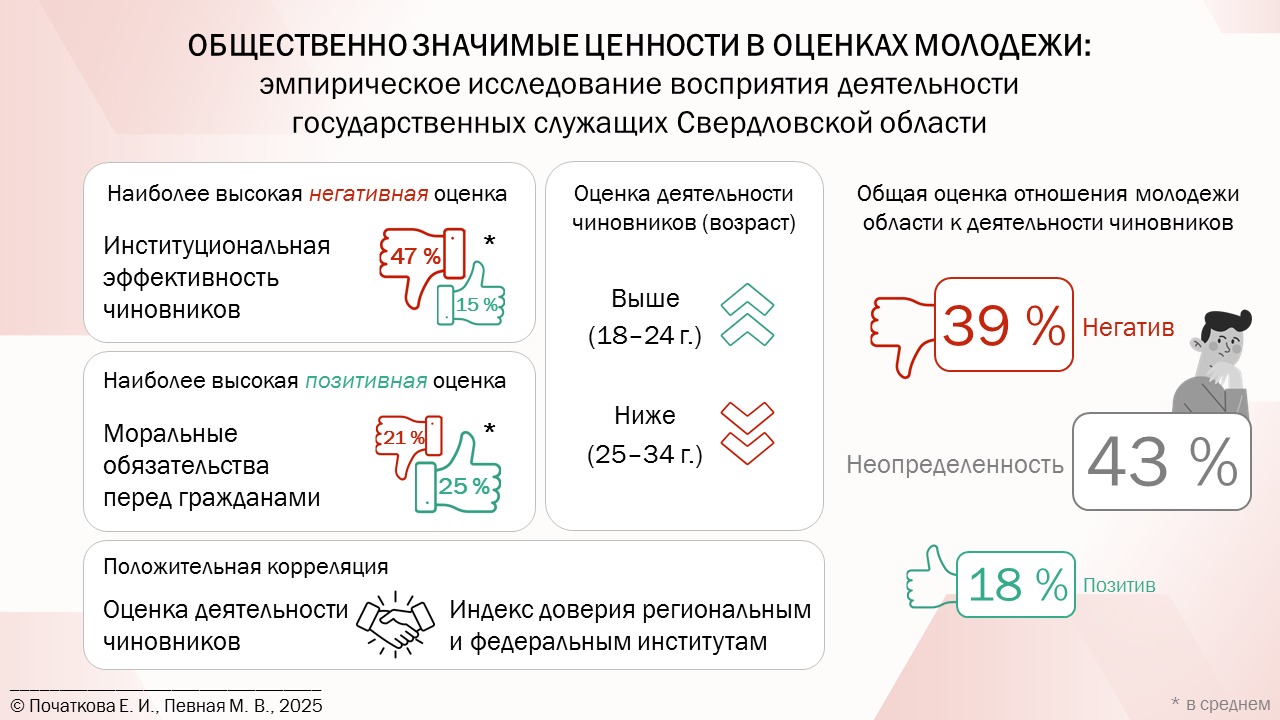
Introduction. The relevance of this topic stems from the problem of weak youth involvement in civic participation practices. Understanding how young citizens reflect on social consensus, social equality, and solidarity determines the direction of youth policy implementation. The purpose of this article is to study young people's perceptions of socially significant values, which are articulated by the generation in its assessments of the work of civil servants in the region.
Materials and Methods. The empirical basis for the study was data from a questionnaire survey of young people in a large region of Russia – the Sverdlovsk Region – conducted in 2023 (quota sample, n = 320). Respondents were asked to answer 15 questions about the activities of local officials. The data was analyzed using descriptive statistics and Spearman's correlation analysis.
Results. Promising areas for dialogue and rapprochement between young people and public authorities in the Sverdlovsk Region have been identified, namely the values of social justice, equality, and solidarity, which are important to the younger generation. The problem of limited awareness among young people about the activities of regional officials was identified, against a backdrop of a fairly high level of distrust of the latter in the context of socially significant values and widespread perceptions of the closed and bureaucratic nature of their work.
Discussion and Conclusion. It was revealed that the younger the youth, the higher the possibility of establishing a system of interaction that fosters positive communication between the younger generation and regional officials. The research results are of practical importance in terms of the work of civil servants with young people in different regions of the Russian Federation, in particular for expanding the dialogue between young people and regional officials.
735-753
Dynamics of Ethno-Confessional Identity of Residents of the Republic of Mordovia
摘要
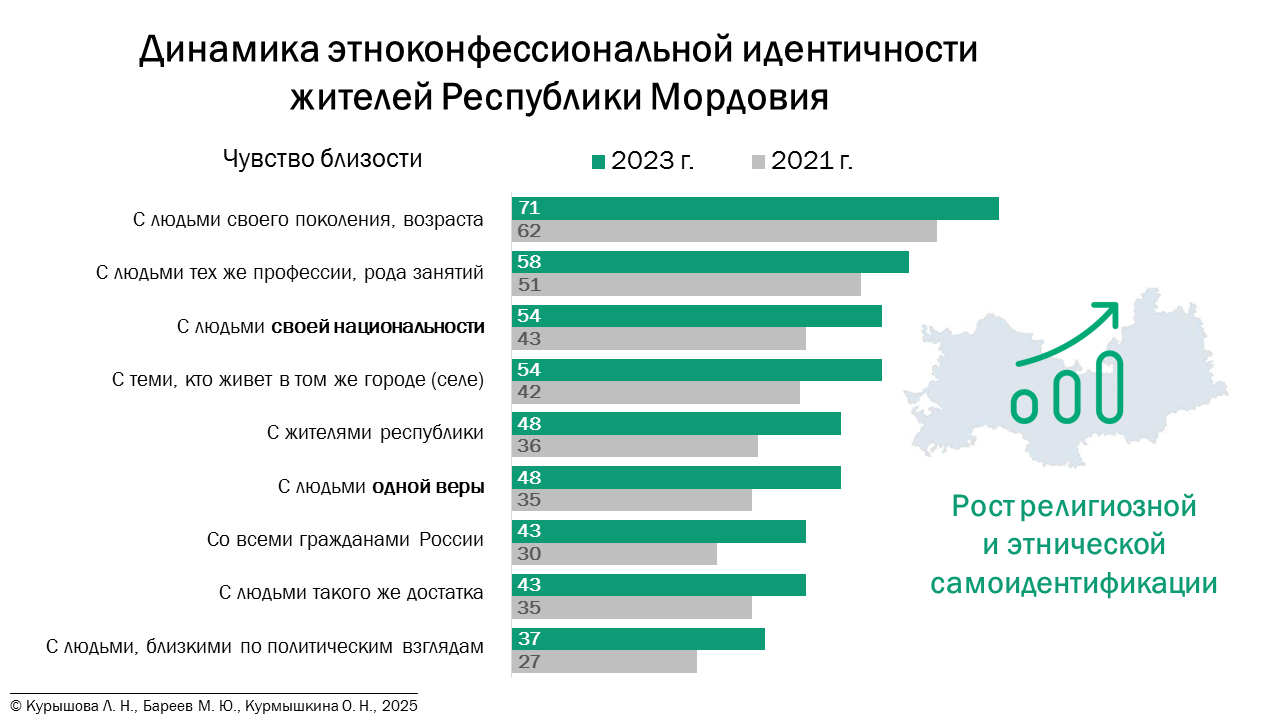
Introduction. The Russian Federation is a multi-religious and multinational country, where the coexistence of various ethnic groups has always been the basis for the sustainable development. The co-existence of different peoples creates the problem of taking into account the characteristics of each ethno-confessional group, harmonizing interethnic and interfaith relations, and the need to maintain stability. The purpose of this study is to identify the features of the ethno-religious identity of the inhabitants of the Republic of Mordovia and its changes in the 2020s.
Materials and Methods. The work is based on the materials of surveys of the population of the Republic of Mordovia, conducted in 2021 and 2023. Data collection was carried out by the method of face-to-face questioning in 23 municipal entities, by a quota representative sample. The volume of the sample population in each survey was 700 people.
Results. The level of religious self-identification of the population of the republic is increasing along with a decrease in involvement in religious rituals, which is especially noticeable among Russian-speaking citizens. The main motivation for participating in these practices is increasingly “tradition” or “the opportunity to spend time with loved ones”, rather than religious intentions. A high level of proficiency in the national languages (Mordvin and Tatar) remains, but their use is limited due to urbanization and globalization. As a result, the level of proficiency in the national language significantly exceeds the frequency of recognition as a native language.
Discussion and Conclusion. Data analysis revealed a high level of ethno-religious identity, which was higher than the level of civic identity, which is generally typical for national republics. At the same time, despite the relatively high level of proficiency in their national language, almost half of the Tatars and Mordvins surveyed consider Russian to be their native language. The results of the study can be used for an adequate assessment of interethnic and interreligious relations in multiethnic regions.
754-770