




On the clinical picture of ergotism pseudotabes ergotinica
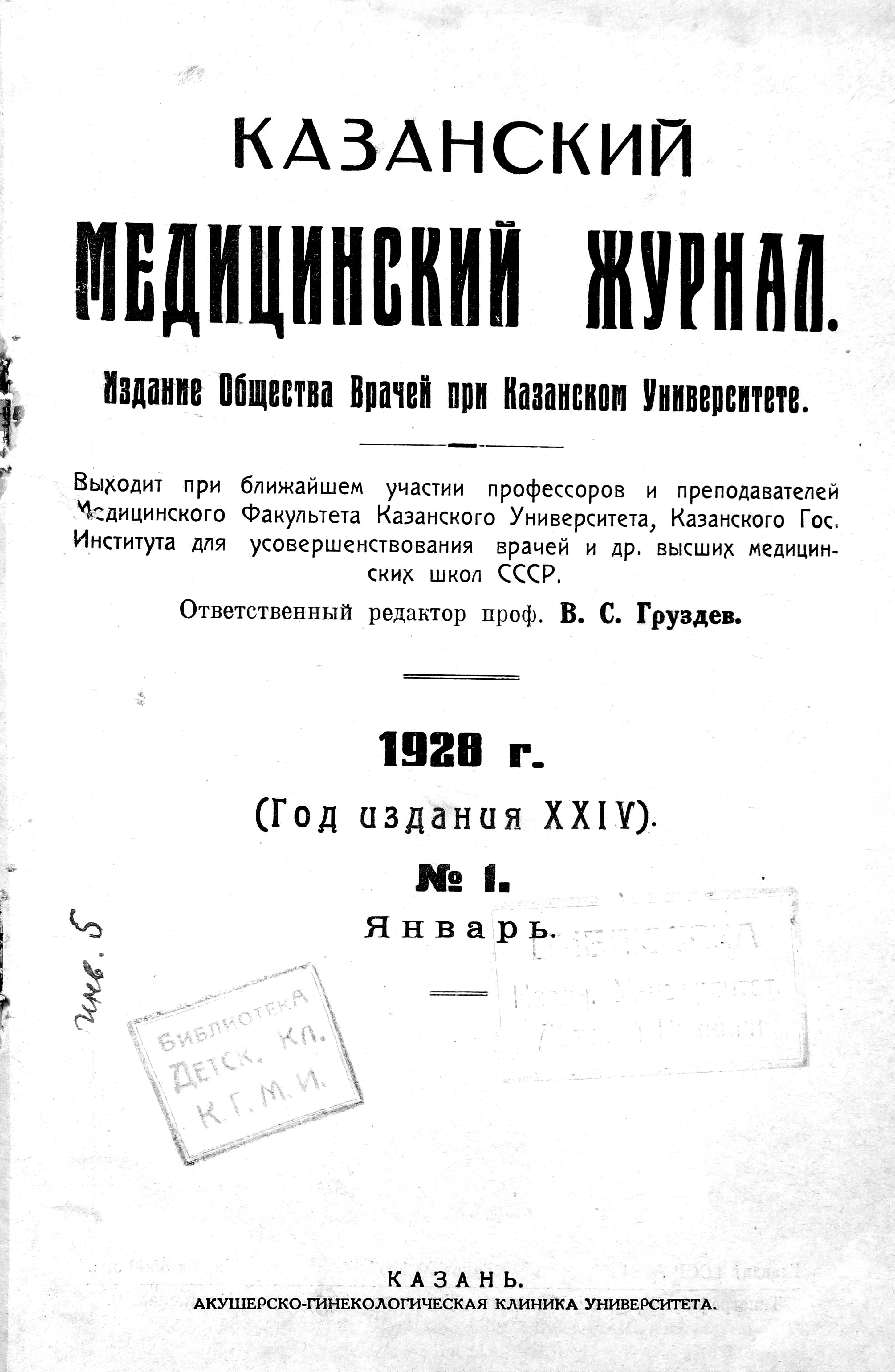
- Authors: Maksudov G.1
-
Affiliations:
- Clinic of Nervous Diseases of Kazan State University
- Issue: Vol 24, No 1 (1928)
- Pages: 96-100
- Section: Articles
- URL: https://journals.rcsi.science/kazanmedj/article/view/89809
- DOI: https://doi.org/10.17816/kazmj89809
- ID: 89809
Cite item
Full Text

Abstract
Epidemics of raphania in Europe, and in Russia in particular, have been observed for a long time. The last epidemic of wicked bark in Western Europe was observed in 1879-80. (Tuezek), while in Russia these epidemics broke out from time to time even in the 20th century (1909-10) (Kolosov). The incessant rains and other climatic conditions of the summer of 1926 contributed to the increased growth of ergot. As a result, due to the uncultivation of the population and the lack of timely preventive measures, we had in 1926-27 an epidemic of ergotism, which invaded the Votsk and Ural regions and part of TR. It is very likely that the epidemic was not limited to these areas.
Keywords
Full Text
##article.viewOnOriginalSite##About the authors
G. Maksudov
Clinic of Nervous Diseases of Kazan State University
Author for correspondence.
Email: info@eco-vector.com
Russian Federation
References
Supplementary files
