





 Email this article
 Visual Representations of Abandoned Industrial Spaces in Tourist Photos
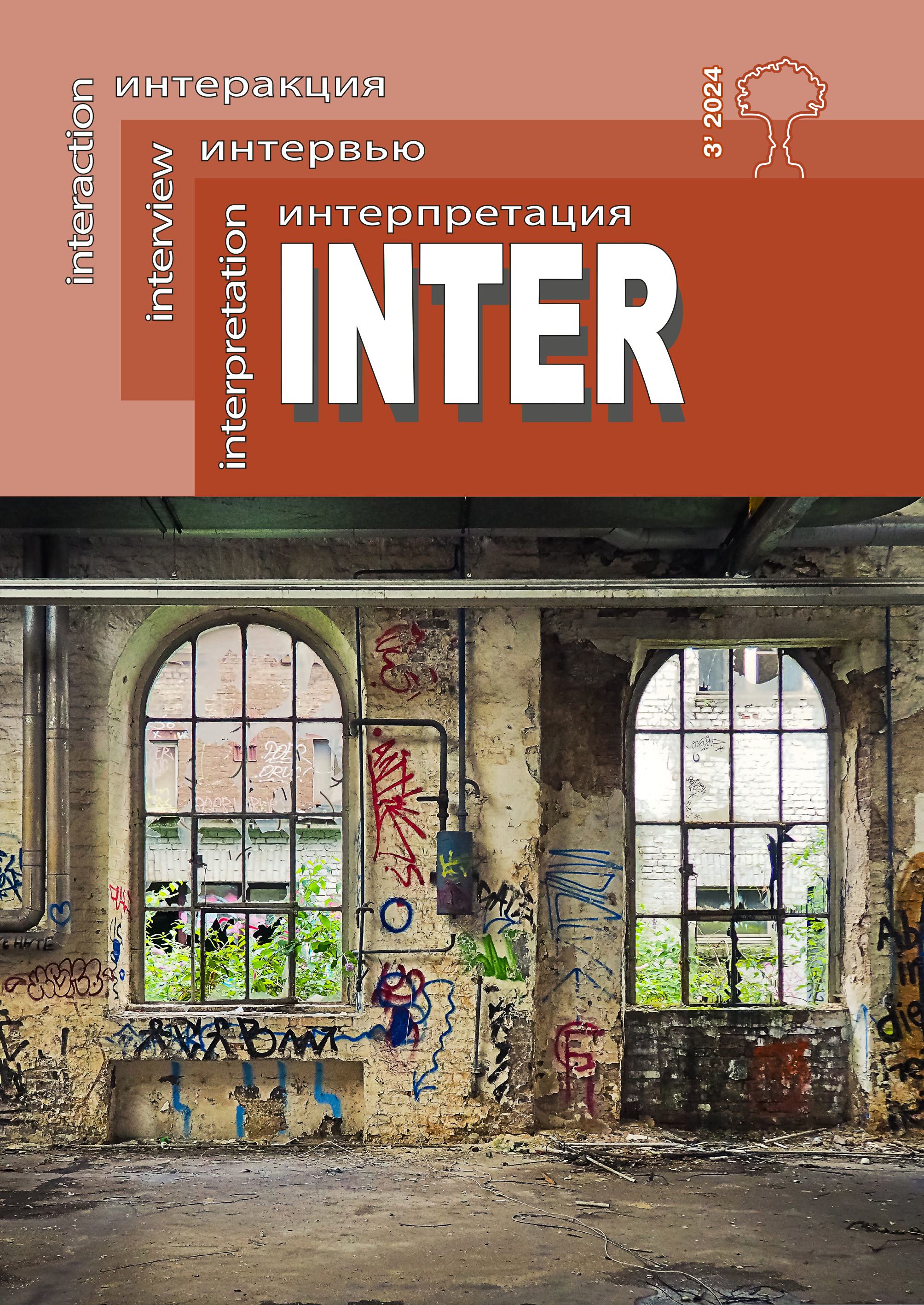
- Authors: Sergeeva O.V.1,2, Nedoseka E.V.2
-
Affiliations:
- St. Petersburg State University
- Sociological Institute of RAS — Branch of the FCTAS RAS
- Issue: Vol 16, No 3 (2024)
- Pages: 49-68
- Section: Visual Sociology
- URL: https://journals.rcsi.science/2687-0401/article/view/268663
- DOI: https://doi.org/10.19181/inter.2024.16.3.3
- EDN: https://elibrary.ru/ZQWFJI
- ID: 268663
Cite item
Full Text

Abstract
A few decades ago, an enthusiastic researcher would have found relatively few data to analyze, looking for such information about the ruins of modernity as the structural consequences caused by rapid cycles of industrialization and desolation, development and depopulation, conflict and reconciliation. However, conducting the same search today reveals an extraordinary increase in academic and public interest in the ruins of the recent past and the associated abandoned places. The authors of this article join in the discussion and explore the images of deindustrialization posted and distributed in the online communities among abandoned sites enthusiasts. The aim of the research is to form an idea of “everyday life policy” about the abandoned industrial facilities popularized by amateur photographers. “Everyday life policy” is expressed through the signifying and conceptualizing the abandoned and ruined places when putting them in a close-up. The authors rely on the ideas of the architect and historian I. de Sola-Morales, who calls the places left by people “terrain vague”. Photographic images of the terrain vague spaces play an important role in conceptualizing them. In order to understand what meanings exactly shaped the public policy, the authors use the ethnographic method of immersion in the online VKontakte/Telegram communities of abandoned sites enthusiasts to discover the recurring iconographic elements of the derelict places. Deindustrialization in photographs is reflected through 1) loss of human; 2) violence of vegetation or nature agency; 3) artifacts and texts of the past or material objects agency. The authors discuss the similarities of the images taken by amateur photographers and those media clichés found in popular movies and video games. Photographs are a way of explaining space and spatial experience. Furthermore, like any other work of art, a photo conveys not only and not so much the actual characteristics of the depicted objects, thanks to which we can form an idea about them (in this case, about space), but also effects and experiences. Thus, a photograph becomes a tool that helps us form value judgments about the places we have seen.
About the authors
Olga Vyacheslavovna Sergeeva
St. Petersburg State University; Sociological Institute of RAS — Branch of the FCTAS RAS
Email: o.v.sergeeva@spbu.ru
ORCID iD: 0000-0002-8093-609X
SPIN-code: 6393-1565
ResearcherId: C-2692-2016
Doctor of Sociology, Associate Professor, Faculty of Sociology, St. Petersburg State University; Leading Researcher, Sociological Institute of RAS — Branch of the FCTAS RAS St. Petersburg, Russia
Elena Vladimirovna Nedoseka
Sociological Institute of RAS — Branch of the FCTAS RAS
Email: nedelena@socinst.ru
ORCID iD: 0000-0003-1944-0367
SPIN-code: 7201-4169
ResearcherId: AEJ-0997-2022
Candidate of Sociology, Associate Professor, Senior Researcher St. Petersburg, Russia
References
- Абрамов Р.Н. «Забытые в прошлом»: освоение заброшенных пространств и феномен нового городского туризма // Микроурбанизм. Город в деталях / Под ред. О. Бредниковой, О. Запорожец. М.: Новое литературное обозрение, 2014. С. 231–255. EDN: RWRQHZ
- Бугрова Е.Д. Индустриальные руины: эстетика modern decay и туризм // Labyrinth. Теории и практики культуры. 2022. № 3. С. 16–23. DOI: https://doi.org/10.54347/Lab.2022.3.2 EDN: QOIEJE
- Бойцова О.Ю. Любительские фото: визуальная культура повседневности. СПб.: Европейский университет в Санкт-Петербурге, 2013. EDN: XMMYYP
- Васильева Е.В. Ранняя городская фотография: к проблеме иконографии пространства // Международный журнал исследований культуры. 2019. № 4. С. 65–86 DOI: https://doi.org/10.24411/2079-1100-2019-00052 EDN: TWUUJE
- Волкова Е.С., Ковалевская Ю.Н. Руины на постсоветском Дальнем Востоке: «созидательное разрушение» или «медленное насилие»? // Известия Восточного института. 2022. № 1. C. 78–90. DOI: https://doi.org/10.24866/2542-1611/2022-1/78-90
- Дегтярев В.В. Память и забвение руин. М.: НЛО, 2023.
- Зиммель Г. Руина // Избранное. Т. 2. Созерцание жизни. М.: Юрист, 1996. С. 227–233.
- Клиценко М.В., Целуйко Д.С. «Заброшки» города Хабаровска в структуре городского пространства // Ойкумена. Регионоведческие исследования. 2022. № 3. C. 100–113 DOI: https://doi.org/10.24866/1998-6785/2022-3/100-113
- Масленников А.А., Тесленок С.А. Классификация, характеристика и картографирование заброшенных военных городков // Актуальные проблемы гуманитарных и социально-экономических наук. 2020. № 1. С. 72–76. EDN: NGZDWI
- Панофский Э. Иконография и иконология: введение в изучение искусства Ренессанса // Смысл и толкование изобразительного искусства. СПб.: Академический Проект, 1999. С. 43–57.
- Поликарпов Д.С., Пустовалова С.Ю., Сененко М.С. Городские руины: визуальность социальных смыслов // Интеракция. Интервью. Интерпретация. 2023. Т. 15. № 3. С. 92–111 DOI: https://doi.org/10.19181/inter.2023.15.3.6 EDN: RDSQIU
- Салмин Л.Ю. Апология трещины // Проект байкал. 2023. № 74. С. 122–127. DOI: https://doi.org/10.51461/pb.74.21
- Сергеева Н.М. Визуальный онлайн-поиск как инструмент иконографического визуального исследования в социологии // Человек в информационном обществе. С.: Издательство Самарского университета, 2021. С. 135–138. EDN: NUFKHN
- Тимофеева С.О. Архитектурные руины как объект туризма // Туризм: технологии & тренды. Е.: Издательство Уральского университета, 2018. С. 229–235.
- Толстая Т.Н. Легкие миры. М.: АСТ: Редакция Елены Шубиной, 2014.
- Чумакова В.П. Эстетика руин в вернакулярной фотографии русскоязычных социальных медиа: постановка проблемы исследования // Наука телевидения. 2018. Т. 14. № 3. С. 74–90. DOI: https://doi.org/10.30628/1994-9529-2018-14.3-74-90 EDN: YNGMOD
- Шевелев Е. Город (без) человека: практики освоения пустых и заброшенных пространств // Микроурбанизм. Город в деталях / Под ред. О. Бредникова, О. Запорожец. М.: Новое литературное обозрение, 2014. С. 42–63.
- Burtynsky E. (2005) China. Göttingen: Steidl.
- Doron G.M. (2000) The Dead Zone and the Architecture of Transgression. City. Vol. 4. No. 2. P. 247–263. DOI: https://doi.org/10.1080/13604810050147857
- Garrett B.L. (2010). Urban Explorers: Quests for Myth, Mystery and Meaning. Geography Compass. Vol. 4. No. 10. P. 1448–1461. DOI: https://doi.org/10.1111/j.1749-8198.2010.00389.x
- Huyssen A. (2006) Nostalgia for Ruins. Grey room. No. 23. P. 6–21. DOI: https://doi.org/10.1162/grey.2006.1.23.6
- Kivell P., Hatfield S. (2018) Derelict Land — Some Positive Perspectives. Environment, Planning and Land Use. London: Routledge. P. 118–129. DOI: http://dx.doi.org/10.4324/9780429457807-9
- Lam T. (2013) Abandoned Futures: A Journey to the Posthuman World. London: Carpet Bombing Culture.
- Larsen J.L., Brandt J. (2018) Critique, Creativity and the Co-Optation of the Urban: A Case of Blind Fields and Vague Spaces in Lefebvre, Copenhagen and Current Perceptions of the Urban. Urban Planning. Vol. 3. No. 3. Р. 52–69. DOI: https://doi.org/10.17645/up.v3i3.1394
- Lynch K., Carr S. (1979) Open Space: Freedom and Control. City Sense and City Design. Cambridge; London: The MIT Press. Р. 413–417.
- Nielsen T. (2002) The Return of the Excessive: Superfluous Landscapes. Space and Culture. Vol. 5. No. 1. Р. 53–62. DOI: https://doi.org/10.1177/1206331202005001006
- Pagano M.A., Bowman A.O’M. (2000) Vacant Land in Cities: An Urban Resource. Washington: Center on Urban and Metropolitan Policy.
- Pineiros E. (2016) Terrain Vague and the Urban Imagery. Nottingham: University of Nottingham.
- Sola Morales De I. (1995) Terrain vague. AnyPlace. Cambridge: MIT Press. P. 118–123.
- Trancik R. (1991) Finding Lost Space: Theories of Urban Design. Hoboken: John Wiley & Sons.
- Vergara C.J. (1999) American Ruins. New York: Monacelli Press.
Supplementary files

