




Russian Journal of Ecosystem Ecology
«Russian Journal of Ecosystem Ecology» is an scientific peer-reviewed online journal, published in Russia.
The journal’s subject area embraces problems of structure and functioning of ground and water ecosystems; ecosystem dynamics; estimation of biodiversity and its importance in structural and functional organization of ecosystems; historical ecology; ecology and environmental protection, ecosystem nature management, modeling in ecology and other problems regarding ecosystem ecology to a wide extent.
The journal publishes surveys, original research articles, theoretical, methodological works, discussions, brief reports, reviews, information on past conferences, annotations, methodological materials, scientific reports on expeditions, descriptions and analyses of experiments in biodiversity restoration, summaries of results of researches held in natural areas of preferential protection.
Registration: The online publication is registered in the Federal Service for Supervision of Communications, Information Technology, and Mass Media. Certificate of registration El № FS 77 — 62950 from 4th September 2015.
ISSN: 2500-0578
Promoter (address): Federal State Government-financed Establishment of Higher Education “Penza State University” (440026, Penza region, Penza, 40 Krasnaya street)
Language(s): Russian, English.
Periodicity: 4 issues per year.
Ағымдағы шығарылым
№ 3 (2025)

- Жылы: 2025
- Мақалалар: 5
- URL: https://journals.rcsi.science/2500-0578/issue/view/24230
Бүкіл шығарылым

Articles
WILLOWS OF THE EUROPEAN PART OF RUSSIA. PART I: DISTRIBUTION AND BIOMORPHOLOGICAL FEATURES OF SPECIES OF THE GENUS
Аннотация
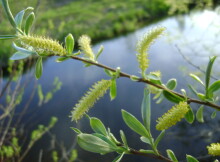
Willows (Salix) are widely distributed geographically, participate in the formation of the vegetation cover, and are widely used in various sectors of the national economy. The aim of this work is to study the biological and morphological characteristics of the boreal willow species in the European part of Russia and their distribution. The research was conducted in the center of the European part of Russia, in its most developed regions, including the Moscow, Vladimir, Nizhny Novgorod, and Penza regions. The study region occupies the center of the East European Plain, the northern and western slopes of the Volga Upland, and the transition to the Oka-Don Lowland. The biomorphological features of 16 willow species were described. The field studies used the methods of "marked bushes" and taxonomic transects. Despite the great similarity in morphological structure, the willow species of the European part of Russia have clear distinctive biomorphological features that distinguish them from each other.
 1-25
1-25


SHORT-GRASS MEADOWS AND PARKLAND FORESTS AS A RESULT OF LONG-TERM HORSE (EQUUS CABALLUS) GRAZING ON ABANDONED FARMLAND
Аннотация
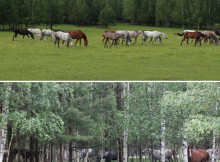
Gregarious ungulates play an important role in ecosystem functioning, not only in open and semi-open landscapes but also in forested ones. In the forest zone, there are agricultural lands exploited as pastures for domestic animals, including horses. This study assesses the species and structural diversity of plant communities formed under the influence of moderate horse grazing. The research was conducted in 2024 at the "Grey Horse" Stud Farm (Nizhny Novgorod Region). The study revealed that moderate horse grazing on abandoned farmland over 20 years led to the formation of several types of plant communities: short-grass meadows and parkland forests. These coenoses are characterized by relatively high indicators of floristic diversity and a wide range of ecologicalcoenotic plant groups. Moderate horse grazing can be considered as a method for maintaining the diversity of terrestrial ecosystems on abandoned agricultural lands.
1-11
FEATURES OF THE DISTRIBUTION OF THE DORMOUSE (GLIS GLIS) ON THE PERIPHERY OF ITS RANGE (USING THE EXAMPLE OF BROADLEAF AND CONIFEROUS-BROADLEAF FORESTS IN THE NIZHNY NOVGOROD REGION)
Аннотация
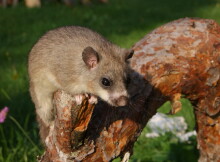
The dormouse is a specialized dendrophilous species, favoring broadleaf forests. A large number of dormouse habitats on the East European Plain have been reduced due to intensive economic activity. As a result, the dormouse is listed in the Red Data Books of 13 regions of the Russian Federation. The aim of this study was to identify factors influencing the presence (or absence) of the dormouse in the forests of the Nizhny Novgorod Region at the northern boundary of its range. Using artificial nests, 25 fragments of broadleaf and mixed-coniferous forests in 11 districts of the Nizhny Novgorod Region were surveyed from 2014 to 2024. The analysis showed that dormice are found only in relict old-growth forests 200 years old or more, avoiding oak forests 150-200 years old. Their presence is influenced by factors such as forest type, stand density, and canopy density. The structure of forest layers is also important. A well-developed understory with a high proportion of common hazel, as well as oak and linden, is essential. No correlation was found between forest fragment size and soil type. The obtained results indicate the need to protect fragments of primary old-growth broadleaf forests, which contain a set of specific characteristics that play a key role in maintaining a stable dormouse population on the northern periphery of its range.
1-14
THE EFFECT OF THE MESOCOSM DIAMETER ON THE RESULTS OF STUDIES WITH EARTHWORMS USING THE EXAMPLE OF APORRECTODEA CALIGINOSA
Аннотация
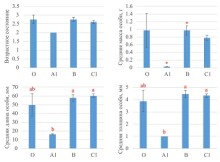
The study of the effect of mesocosm diameter on the population parameters of Aporrectodea caliginosa earthworms and soil properties is necessary for standardization of soil-ecological experiment methods. The aim of the work is to determine the optimal mesocosm diameter that provides reliable results at minimal cost. The experiment was conducted in mesocosms with a diameter of 10, 15 and 25 cm filled with alluvial sod soils. The morphometric parameters of worms (length, thickness, weight), population parameters (survival, productivity, biomass), and soil properties (pH, organic matter content) were studied. Statistical analysis was performed using ANOVA and Tukey's test. The effect of mesocosm diameter is significant only for morphometric parameters, but not for population ones. Acidity and organic matter content were dependent on the presence of earthworms and the soil horizon, but not on the mesocosm diameter. In experiments with earthworms, it is necessary to take into account the mesocosm diameter when studying the morphometry of individuals.
1-11
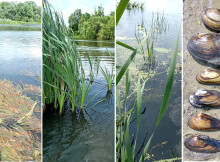
BIOTOPIC DISTRIBUTION OF MOLLUSKS IN THE SURA RIVER BASIN BELOW THE CITY OF PENZA
Аннотация
For the development of scientifically sound approaches to the sustainable management of water resources, it is necessary to study the structural components of aquatic communities, including mollusks. The aim of this work is to study the malacofauna of the Sura River basin downstream of the city of Penza, with an analysis of the spatial distribution of species depending on the type of water body. Samples of mollusks were collected in various types of water bodies: the channel of the Sura River (11 stations), its tributaries (4), and oxbow lakes (7). The collection was carried out manually from the substrate, vegetation, and using a hydrobiological net, with the geographical coordinates recorded. A total of 38 species from 10 families were identified. The greatest diversity was noted in the families: Lymnaeidae – 8, Planorbidae – 8, Sphaeridae – 6, and Unionidae – 5. Species preferences for specific biotopes were established: rivers, tributaries, or oxbow lakes. The invasive species Ph. acuta was recorded near populated areas. Both eurybiontic and stenotopic species were discovered (e.g., S. saridalensis and Pl. planorbis – stagnant water bodies; R. auricularia – areas with slow water flow). The presence of the invasive species Ph. acuta indicates anthropogenic influence on the river ecosystem.
1-15