



Development of tax incentives for non-profit organizations
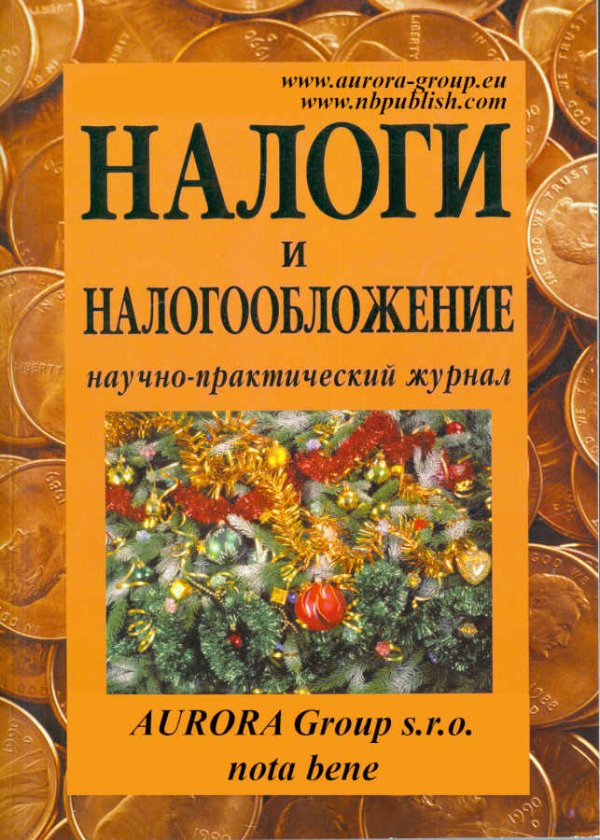
- Authors: Garibov A.G.1
-
Affiliations:
- Issue: No 5 (2023)
- Pages: 54-70
- Section: Articles
- URL: https://journals.rcsi.science/2454-065X/article/view/360732
- EDN: https://elibrary.ru/FTWPIW
- ID: 360732
Cite item
Full Text

Abstract
The subject of the study is to identify possible ways to develop tax incentives for non-profit organizations in Russia. The author focuses on the important role of non-profit organizations in the economic development of the country and the provision of social services to society, improving the quality of life of various segments of the population. This paper examines the theoretical aspects of the functioning of NPOs and their taxation system, analyzes the dynamics of existing and newly created NPOs and the factors influencing it; identifies the main problems in the application of the norms of the Tax Code of the Russian Federation that complicate the activities of non-profit organizations, as well as existing gaps in legislation that cause contradictions in tax practice. A special place in the scientific research is occupied by the development of possible options for reforming existing regulatory legal acts in the field of taxation to stimulate the development of the domestic non-profit sector. Based on the results of the work, a conclusion is made about the inconsistency of tax legislation and the presence of administrative barriers that hinder the development of the non-profit sector in Russia. According to the author, the proposals formulated in this scientific article on changing legislation can be applied in practice and are designed to improve the existing conditions for the functioning of non-profit organizations in Russia, to create additional tax incentives for the development of the non-profit sector in our country.
References
Проблемы налогообложения некоммерческих организаций в России / С. Синельников-Мурылев, И. Трунин, М. Голдин [и др.]; – М.: ИЭПП, 2007. – 371 с. Грищенко А.В. Дискуссионные вопросы налогового регулирования деятельности некоммерческих организаций / Грищенко А.В., Грищенко Ю.И., Чигракова Н.М. // Известия УрГЭУ. – 2017. – № 2. – С. 27-37. Дорошина О.П. Мониторинг государственной поддержки СО НКО в режиме налоговой филантропии (опыт Республики Татарстан) // Научно-исследовательский финансовый институт. Финансовый журнал. 2014. № 3 (21). С. 111-120. Грищенко Ю.И. Специфика применения специальных налоговых режимов некоммерческими организациями // Некоммерческие организации в России. – 2016. – № 2(91). Кузьмин Г. В. Предпринимательская деятельность НКО: учет и налогообложение // Бухгалтерский учет. – 2011. – № 4. – С. 45-52. Муханова И.Н. Негосударственные некоммерческие организации: учет и отчетность // Журнал «Бухгалтерский учет». – 2021. - № 8. – С. 119-123. Гранцева, Т. Г. Финансовая и налоговая поддержка НКО в условиях пандемии: российская и зарубежная практика / Т. Г. Гранцева // Экономика и управление: проблемы, решения. – 2022. – Т. 2, № 5(125). – С. 208-212. Чикина, А. С. Опыт государственной поддержки некоммерческих организаций Ульяновской области / А. С. Чикина, П. Л. Офицеров // Дневник науки. – 2022. – № 12(72). Клишина Ю.Е. Тенденции развития некоммерческого сектора экономики и совершенствование системы его финансирования / Клишина Ю.Е., Углицких О.Н. // Финансовая аналитика: проблемы и решения. – 2015. – № 36. – С. 38-48. Duquette Nicolas J. Do tax incentives affect charitable contributions? Evidence from public charities' reported revenues // Journal of public Economics. 2016. No 137. Pp 51-69. https://doi.org/10.1016/j.jpubeco.2016.02.002 Bolton P., Mehran H. An introduction to the governance and taxation of not-for-profit organizations // Journal of Accounting and Economics. 2006. No 41. Pp 293-305. https://doi.org/10.1016/j.jacceco.2006.06.001 Митюкова Э.С. Некоммерческие организации: правовое регулирование, бухгалтерский учет и налогообложение / Э.С. Митюкова. – 5-е изд. – М.: Издательство АйСи, 2022. – 304 с. Медведева Н.В. Некоммерческие организации в России: барьеры и условия развития // Социодинамика. – 2018. - № 4. – С. 12-20.
Supplementary files
