





 Email this article
The Company’s Contract Model in the Context of the Social Agenda
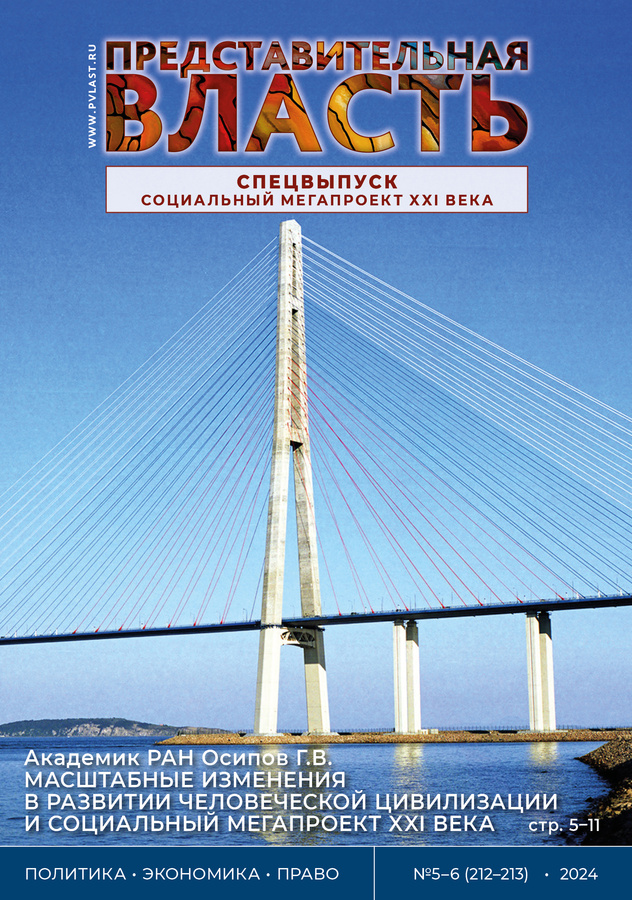
- Authors: Lutsenko S.I.1
-
Affiliations:
- Center for Economic Analysis of Law and Law Enforcement Problems of the Institute of Economic Strategies
- Issue: No 5-6 (2024)
- Pages: 54-60
- Section: Социальное государство, экономика и право
- URL: https://journals.rcsi.science/2073-9532/article/view/304734
- DOI: https://doi.org/10.54449/20739532_2024_5-6_54
- ID: 304734
Cite item
 Open Access
 Access granted
 Subscription Access

Abstract
The author examines the peculiarities of the functioning of a business company (commercial organization) and a founder (shareholder) in the plane of unity of property interests. The relevance of the article is to consider the economic community in the plane of the product of legal technology (legal fiction) with the common interests of the founders with the company. The use of the «abstract losses» mechanism will allow the company and its owners to create a guarantee against unfair actions on the part of management (members of the board of directors). The author considers the company in the context of the principle of sustainable development, which is based not only on improving the well-being of the owner, but also taking into account ESG factors. The long-term incentive (motivation) program is designed to bring together the property interests of the owner and other interested parties in the long term.
About the authors
S. I. Lutsenko
Center for Economic Analysis of Law and Law Enforcement Problems of the Institute of Economic Strategies
Author for correspondence.
Email: scorp_ante@rambler.ru
Director, member of the Expert Council of the Defense Committee of the State Duma of the Federal Assembly of the Russian Federation Moscow, Russia
References
- Горбашев И.В. Критика экономической теории юридических лиц // Предпринимательское право. 2021. — № 4. С. 18-29.
- Груздев В.В. Имущественное обособление юридического лица // Юрист. 2014. — № 3. С. 16-20.
- Гутников О.В. Юридическая ответственность в корпоративных отношениях // Вестник гражданского права. 2014. — № 6. С. 51-117.
- Долинская В.В. Изменения в арбитражном процессуальном законодательстве и право корпораций // Законы России: опыт, анализ, практика. 2011. — № 10. С. 58-62.
- Кузьмина И.К. Ответственность участников (акционеров) хозяйственных обществ, возникающая в гражданском обороте при банкротстве // Законы России: опыт, анализ, практика. 2019. — № 7. С. 46-51.
- Луценко С.И. Теневая часть корпоративного права: вопросы и ответы // Современное право. 2020. — № 1. С. 66-73.
- Луценко С.И. Экономико-правовой анализ концепции благого управления в деятельности компании // Экономическая наука современной России. 2023. — № 2. С. 72-82.
- Степанов Д.И. Интересы юридического лица и его участников // Вестник экономического правосудия Российской Федерации. 2015. — № 1. С. 29-83.
- Суханов Е.А. Комментарии к статьям 48, 50 Гражданского кодекса РФ // Вестник гражданского права. 2022. — № 1. С. 136-166.
- Allen W. Our Schizophrenic Conception of the Business Corporation // Cardozo Law Review. 1992. Vol. 14. pp. 261-281.
- Millon D. Theories of the Corporation // Duke Law Journal. 1990. Vol. 1990. P. 201-262.
- Morawetz V. A Treatise on the Law of Private Corporations Other Than Charitable Little // Boston. Little. Brown. 1882. — 670 p.
- Watson S. The Company and its Constituents // Law Working Paper. University of Auckland and ECGI. 2023. Pp. 1-29.
Supplementary files
