






 Email this article
 Freedom and human rights
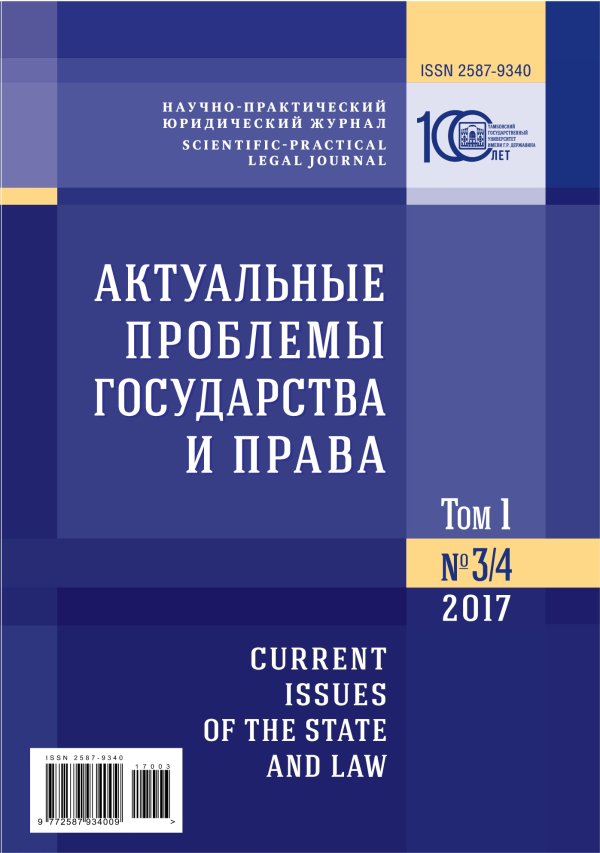
- Authors: Peshkoska E.1, Milanova L.1
-
Affiliations:
- International Slavic University “Gavrilo Romanovich Derzhavin”
- Issue: Vol 1, No 3-4 (2018)
- Pages: 26-31
- Section: General Theory and History of Law and the State
- URL: https://journals.rcsi.science/2587-9340/article/view/362981
- ID: 362981
Cite item
Full Text

Abstract
Human rights represent the highest achievement in the development of the value system of man. They pool the human dimension of all previous teachings (philosophical, religious, legal) and measure the achieved civil development of mankind. Rights and freedoms are those that apply to every human being, regardless of age, color, race, religion, gender, sexual, political or any other affiliation or orientation. This means that universality as a principle is directly linked to respect for human dignity, which is directly and completely linked from birth, lasts throughout life, and shall not be violated, denied, revoked or in any way misused. The principles of the Universal Declaration of Human Rights are analyzed, their natural character and social nature are justified. It is noted that freedom and human rights as standards must be respected and be covered in all areas of daily life in the state where the institutions of government promote and safeguard the rights and freedoms as its core duties to every citizen.
About the authors
Erika Peshkoska
International Slavic University “Gavrilo Romanovich Derzhavin”
Author for correspondence.
Email: erica_peshkoska@yahoo.com
Master of Philosophy, Associate Professor of the Faculty of Law
Macedonia, the former Yugoslav Republic of, 77 “Marshal Tito” St., Sveti Nikole 2220, Republic of MacedoniaLiljana Milanova
International Slavic University “Gavrilo Romanovich Derzhavin”
Email: milanova.liljana@yahoo.com
Associate Professor of the Faculty of Law
Macedonia, the former Yugoslav Republic of, 77 “Marshal Tito” St., Sveti Nikole 2220, Republic of MacedoniaReferences
- Frchkovski Љ. Meѓunarodno pravo za pravata na chovekot. Skopјe, 2005. (In Macedonian).
Supplementary files

