




 Open Access
 Access granted
 Subscription Access
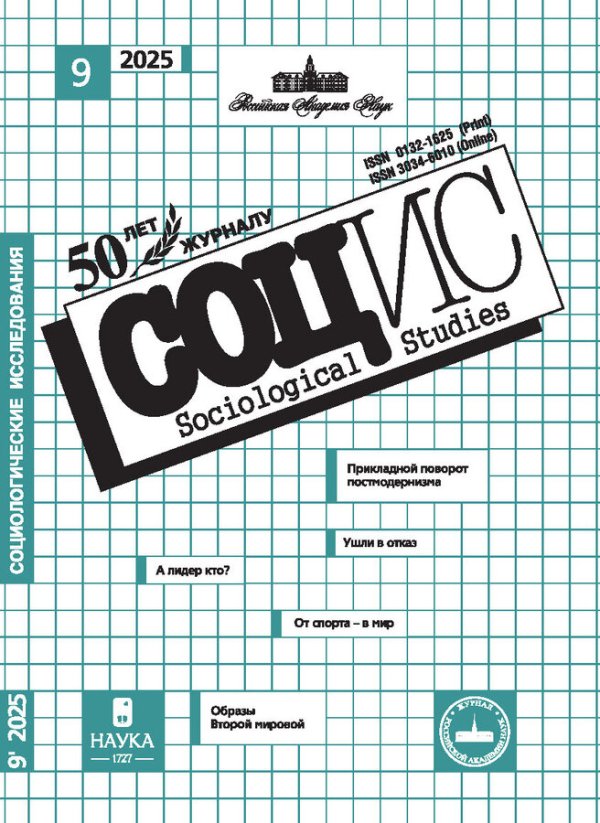
No 9 (2025)

XXVII KHARCHEV READINGS
“THE APPLIED TURN OF POSTMODERNISM” AS A PREREQUISITE FOR A CHANGE IN ETHICAL PARADIGMS
Abstract
The article examines the practical consequences of the postmodernism spread as a dominant intellectual and ideological trend in Western countries. Based on the analysis of the Western authors’ the critical direction concepts it is shown that its consequence is a transformation of the ethical foundations of social actions, the emergence of a new ethical paradigm called the “culture of victimhood”. The influence of postmodernism is manifested in the blurring of the boundaries of the binary opposition “good – evil”, the shift in emphasis from actions to discourses, from universalistic approaches and objective facts to individual experience and emotions, in the construction of the moral conflict poles based on oppression and aggression narratives. The novelty of the author’s approach lies in the substantiation of the concept of “culture without a hero” as a consequence of the actualization of applied postmodernism, its destructive influence on the ethics of responsibility, in the disclosure of specific mechanisms of social control, in particular, the “cancel culture” as a tool for implementing practices of the “victimhood culture”. The question is raised about the prospects for the spread of this “culture” in Russia and a conclusion is made about the existence of certain prerequisites for it. At the same time, it is shown that the critical perception of postmodernism in academic circles and the absence of its “applied turn”, a high value of heroism and service are factors hindering it. Neomodernism may become a significant alternative.
Sociological Studies. 2025;(9):4-13
 4-13
4-13


COMPOSITION OF KINSHIP AND SYSTEM OF RELATIONS (on a Social Constituent of Human Essence)
Abstract
The issue of human essence is addressed. To be more accurate, the issue of its social constituent. It is related, so the author, to two other constituents, a natural one and an existential one, and does not always dominate in endeavors of an individual’s self. The starting point of discussions is a thesis advanced by K. Marx with a relational (appellation to the system of relations) approach to the interpretation of an essential characteristic of human being found in his works. By critically taking this attitude as an exhaustive one, the author ranks public relations as those of a lower range compared to kinship. It is exactly the kinship as a valuable positive spontaneity that differs both from totality, and a comprehensive system of relations mediated a priori is deemed a nucleus of a human essence’s social constituent. However, it’s unfeasible to extrapolate kinship to all sociality of a human being. As a rule, it’s exactly in relations that an individual has with the public. G. Bataille’s attempt of sanctifying relations is assessed ambivalently. Only perceiving the “sacral sociology” without unconditional hegemony of relationalism and mediation provides adherence to the kinship idea and its thorough understanding. The author states and explains a paradoxical composition of the kinship and system of relations – a composition forming the sociality of a human being.
Sociological Studies. 2025;(9):14-22
14-22
МЕТОДОЛОГИЯ И МЕТОДЫ СОЦИОЛОГИЧЕСКОГО ИССЛЕДОВАНИЯ
The Structure of the Reasons for Hard Refusals in Mass Telephone Surveys (Using the Example of Surveys on the Russian-Ukrainian Conflict)
Abstract
In mass telephone surveys of Russians on political topics, the number of categorical refusals consistently exceeds the number of successful interviews. This poses a threat of systematic bias in the samples, so it is important to study the structure of the causes of severe rejections in the materials of political polls. To do this, we asked the respondents who categorically refused to participate in the survey a question about the reason for their refusal. This question was asked to respondents who received the “hard refusal” status when requesting consent to an interview in five waves of mass telephone surveys on the Russian-Ukrainian conflict conducted from March 10 to July 30, 2022. The total volume of samples amounted to 16479 hard failures. Although the frequency of the reasons for severe refusals cited by respondents differs significantly between the survey waves, the ratio of their prevalence ranks is quite stable, which indicates the stability of the ratio of reasons for unwillingness to participate in interviews. A significant majority of those who are not ready to participate in surveys either do not think about the reasons for their unwillingness to take the questionnaire, or do not articulate these reasons (on average, 69.1 % for all waves). The remaining respondents either cite employment (10.9 %), or are not interested in the topic of the survey or talk about their apolitical nature (7.8 %), or are afraid to participate in political polls (5.9 %). The remaining reasons are indicated by single percentages.
Sociological Studies. 2025;(9):24-33
24-33
DEMOGRAPHIC CORRELATES OF ATTRITION IN LONGITUDINAL ONLINE SURVEYS IN RUSSIA: EVIDENCE FROM FOUR WAVES OF THE "VALUES IN CRISIS" PROJECT
Abstract
This study explores the demographic correlates of attrition in longitudinal online surveys by utilizing data from four Russian waves of the international «Values in Crisis» project (designed to examine societal consequences of the COVID‑19 pandemic). Respondents were recruited from an online consumer panel, maintained by OMI, a leading Russian marketing research company. Data collection occurred in June 2020, April-May 2021, November-December 2021, and July-September 2022. Only 606 (39.7 %) out of 1527 initial participants took part in all four rounds; the rest missed at least one round or dropped out. Both descriptive statistics and binary logistic regression analysis reveal that older, male, wealthier, and more educated participants had a higher probability of completing all four rounds. To sum up, attrition in online panels in the Russian context can be substantial and is largely non-random in demographic terms. Researchers should take this into account when planning longitudinal web surveys and interpreting their results.
Sociological Studies. 2025;(9):34-48
34-48
POLITICAL SOCIOLOGY
POLITICAL LEADERSHIP AND ITS SPECIFICS IN THE CONTEXT OF CURRENT GLOBAL CHANGES
Abstract
The subject of the article is the essential features of leadership, specifics of its implementation in politics and public administration. The features of leadership potential in various historical conditions are presented, and it is emphasized that in the public sphere, the authority of a leader, his/her ideological culture and ideological conviction, status opportunities, and mastery of the art of political maneuver very often play a decisive role. Professional competencies, knowledge of relevant state doctrines and strategic national projections are the leading characterological feature and a determining factor in the quality of leadership and its effectiveness. Methodology: a dialectical-materialistic model in accordance with the principles of science, historicism, consistency and objectivity. Methods: comparative structural and functional analysis, induction and deduction, forecasting and strategic modeling. It has been proven that the dominant ideological and worldview basis that ensures proper leadership effectiveness in the conditions of modern reality is the values of true democracy, legal legality and federalism, social justice, secularism and humanism, and the categorical rejection of positions that are alien to our value matrix. First of all, the ideas of liberal-globalist egocentrism, neo-colonialism, neo-Nazism, and Russophobia. The main criterion for the quality of the ruling elite and its leaders is the quality of people’s lives and the country’s authority in the global community. The article also identifies boundaries between potential and actual leadership, describes the conditions and means of forming, developing, and effectively implementing leadership qualities, and formulates recommendations for the development of the leadership institution, its legal, socio-psychological, and ideological propagandist support
Sociological Studies. 2025;(9):49-62
49-62
National pride and trust in President in Russia: socio-demographic characteristics and emancipative values
Abstract
Discussions about the role of values and national pride in determining institutional trust are prominent in contemporary Russian politics. The comparison of national pride and trust in the president is necessary since both variables play an essential role in shaping social cohesion of any given society. Christian Welzel's theory of emancipatory democratization identifies four dimensions that structure individual “liberty aspirations” (Welzel 2013). The degree of autonomy granted to children by their parents (1), opportunities available to individuals to make their voices heard in the sphere of politics (2), equality between genders (3), and choices that people make to control their bodies and personal lives (4). We combine this theory with the findings of several publications concerning socio-demographic factors of political culture formation to compare the "portraits" of those who have high national pride and tend to trust state institutions. Multinomial regression is applied to survey data collected in 60 regions of Russia in 2019–2020. Results show that socio-demographic characteristics and value orientations of Russians with high indicators of national pride and trust in the president coincide. These population groups tend to be low on emancipative values index, high on religiosity and income satisfaction. Women, older people, and residents of rural areas trust the president and feel proud more often than other population groups. Welzel’s theory suggests that the growth of emancipative values that typically follows improvements in economic well-being could further dampen such indicators of social cohesion as national pride and trust in the president.
Sociological Studies. 2025;(9):63-78
63-78
HISTORY OF SOCIOLOGY
Conceptual Reconstruction of V. M. Khvostov’s Sociological Views
Abstract
The article analyzes the sociological views of V. M. Khvostov in two conceptual perspectives – semiotic and the perspective of formal tradition. Both are connected with the assertion of a realistic approach to the problem of social ontology, which comes into some contradiction with the psychological motives of Khvostov’s sociological work. The semiotic theme as a theme of external manifestation of human states and intentions was provoked by the problematic of “alien animation” popular in the Russian intellectual community since the late 19th century. This line was continued but did not receive theoretical completion in P. Sorokin’s concept of “conductors of interaction”. Khvostov’s turn to the theme of social forms was influenced by G. Simmel, despite Khvostov’s highly critical attitude to the latter’s formalist intuitions. Khvostov’s interest in the problems of “stable social formations or public unions” manifested itself in the identification of “social typology” as one of two branches of sociology. Khvostov’s division of “public unions” into spontaneous (causal) and organized associations deserves special attention. In the first case, we can talk about natural social forms, in the second – about institutional ones. Viewed from the selected theoretical perspectives, it would be premature to characterize Khvostov’s sociological ideas as holistic concepts, however, both the semiotic and formalistic intuitions of the scientist make a significant contribution to their formation.
Sociological Studies. 2025;(9):79-88
79-88
THE CONCEPT OF LOGICAL SOCIOLOGY BY A.A. ZINOVIEV. А HISTORY OF SOVIET AND POST-SOVIET SOCIOLOGY
Abstract
The article analyzes the logical sociology concept by A. A. Zinoviev (1922–2006). This theoretical and sociological doctrine, unique for Russia, fetures an original neopositivist analytical philosophy of society, culture, and history. A. A. Zinoviev adopted the Marxist epistemological style and was both a scientist and a philosopher. In his study of social realities, he strictly followed the ideals of scientificity, the norms of logic, and the methodology of science. The article reviews only the conceptually significant notions of logical sociology: “cheloveynic”, “social atom”, “social law”, “objective dialectics”, and “social organization”. The author believes that there are grounds to consider A. A. Zinoviev one of the most outstanding Russian sociologists and that his social theory should be included in the context of the history of Soviet and post-Soviet sociology.
Sociological Studies. 2025;(9):90-103
90-103
SOCIOLOGY OF SPORT
A Sports Profile of Transnational Migration: Foundational Concept and Current Research Streams
Abstract
The vast scale of migration processes shaping modern global society has led to a qualitative transformation, marked by the emergence of transmigration and transmigrants. This article examines this phenomenon within a specific social domain – sports – through the lens of professional athletes known as sports legionnaires. The study explores the migratory activity of athletes, justifies the classification of sports legionnaires as transmigrants, and highlights their significant role in the development of the global professional sports industry. It also underscores their sociocultural mission in enhancing the sporting culture of host countries, transmitting cultural values from their countries of origin, and fostering cross-cultural exchange. Furthermore, the article emphasizes the importance of multiple identity formation as a key mechanism for effective adaptation in the context of transmigration. Lastly, it examines the role of digital platforms in maintaining communication networks, both with athletes’ home countries (“home ties”) and within host nations.
Sociological Studies. 2025;(9):104-114
104-114
DISCISSION. POLEMICS
Conflict of national images of World War II in the context of sociology of world wars
Abstract
The article presents a macrosociological approach to understanding world wars based on the world-system paradigm of social science in the form of a scientific essay. It supports the controversial thesis that in the history of modern and contemporary times there have been not two world wars, but significantly more. It is proposed to call world wars armed conflicts that are waged on a planetary scale, are characterized by large scales and, most importantly, have a strong influence on global world history. With this approach, the Thirty Years’ War of the 17th century can be considered the “Zero” World War, and the events associated with the Central Military District in Ukraine can be considered the “Third”. These conflicts occur periodically, since they are caused by the power competition of nation-states for leadership in the core of the modern world system. Russia’s increasing participation in these global conflicts, aimed at increasing its geopolitical independence, is due to the paradoxical combination from the 18th century to the present day of its economic backwardness from the West with high military force. This approach allows us to reject the opinion that World War II was supposedly a manifestation of a centuries-long conflict between Russia and the West, since in this, as in previous world wars, Russia fought against some Western countries in alliance with others. An overview of the strong differences in the memory of World War II in Russia, China and the West is given: all national images of history have deviations from the “academic” historical reality, but in different aspects. The world-system approach allows us to explain the modern struggle against the “falsification of World War II” as a clash of different national versions (images) of history, the differences between which are mainly not opportunistic, but objectively determined – in particular, a certain “bias” of all national versions of historical memory and its different significance in different countries-civilizations.
Sociological Studies. 2025;(9):115-128
115-128
The Concept of Trauma Society in the Works of German and Russian Social Scientists
Abstract
In the past century, many nations experienced catastrophic events that produced cultural traumas reproduced in the mass consciousness from generation to generation. To understand similarities and differences between various types of historical collective trauma, this article provides an analytical overview of the works of German cultural scholar A. Assmann on contemporary German memorial culture, comparing them with J. T. Toshchenko's concept of a trauma society. Key attention is paid to A. Assmann's book “The New Discontent with Memorial Culture” about the experience of historical guilt for World War II as a national collective trauma by contemporary Germans. A comparison of Assmann's approaches with Toshchenko's works from 2010–2020 on historical memory and collective trauma in post-Soviet Russian society reveals commonalities and differences in the experience of national catastrophes. The conclusion is made that memorial culture associated with historical trauma, despite the presence of specific national features, has characteristics applicable to different countries. The concept of a “trauma society” should be considered universal, allowing research on historical memory and collective national trauma to be incorporated into the broader macrosociological theoretical framework of social development. At the same time, the qualitative differences between Russian trauma society, associated with the experience of the 1990s events, and German trauma society still experiencing the aftershocks of Nazi 1940s crimes are emphasized. A comparative review of discourses characteristic for various traumatized societies allows conclusion to conclude that it is necessary for the collective consciousness of societies to work with their historical memory, taking into account peculiarities of national culture, historical background, and current socio-political situation, in order to avoid socially dangerous destructive phenomena and processes.
Sociological Studies. 2025;(9):129-139
129-139
FACTS. COMMENTS. NOTES
IGNORING RED FLAGS: WHEN WORK TAKES PRIORITY OVER HEALTH
Abstract
This article presents the results of a sociological study analyzing the factors influencing citizens’ decisions to seek medical care when experiencing warning symptoms. Based on a representative survey of 2,717 respondents from 85 regions of the Russian Federation, it was found that a significant proportion of the population tends to ignore potentially dangerous symptoms while continuing work activities. The study revealed that psychosomatic manifestations – such as apathy (83.5 %) and loss of appetite (84.5 %) – are most frequently disregarded, whereas objective pathological markers, including blood in urine (70.3 %) and chest pain (56.1 %), more often prompt individuals to seek medical attention. Statistical analysis identified significant correlations between delayed medical consultation and sociodemographic factors (male gender, younger age), low socioeconomic status, and psychological attitudes (fatalism, feelings of shame). To address this issue, comprehensive measures are needed, including raising public awareness about warning symptoms, emphasizing the importance of timely disease diagnosis, and improving healthcare accessibility.
Sociological Studies. 2025;(9):140-146
140-146
SOCIO-DEMOGRAPHIC PORTRAIT OF A MODERN ARCHIVAL VOLUNTEER IN RUSSIA
Abstract
This paper explores archival volunteering as a promising field within the contemporary Russian volunteer movement. Based on the first exploratory online survey (2025) conducted by the All-Russian Research Institute of Archival Science and Records Management, it analyzes volunteers’ motivations, activities, and roles, such as event support, digitization, and visitor assistance. The findings show that most archival volunteers are over 35, often hold higher education degrees, and are motivated by the preservation of historical memory and civic engagement. Participation is usually periodic due to employment commitments, yet strongly linked to personal research interests. The results offer practical insights for improving volunteer management in archives, including recruitment, training, and recognition.
Sociological Studies. 2025;(9):147-153
147-153
ANNIVERSARY
Поздравляем Анну Семеновну Готлиб!
Sociological Studies. 2025;(9):154-155
154-155
Матрицы, в которых мы живем: к юбилею Светланы Георгиевны Кирдиной-Чэндлер
Sociological Studies. 2025;(9):156-161
156-161
ПОЗДРАВЛЯЕМ ЗАРЭТХАН ХАДЖИ-МУРЗАЕВНУ САРАЛИЕВУ!
Sociological Studies. 2025;(9):162-162
162-162
ПОЗДРАВЛЯЕМ ВИКТОРИЮ ВЛАДИМИРОВНУ СЕМЕНОВУ!
Sociological Studies. 2025;(9):163-164
163-164
ACADEMIC EVENTS
DOCTORS DISSERTATIONS IN SOCIOLOGY SUCCESSFULLY DEFENDED IN 2024
Sociological Studies. 2025;(9):167-168
167-168
JOURNALS’ GUIDE
Zhurnal'nyy gid
Sociological Studies. 2025;(9):170-174
170-174